
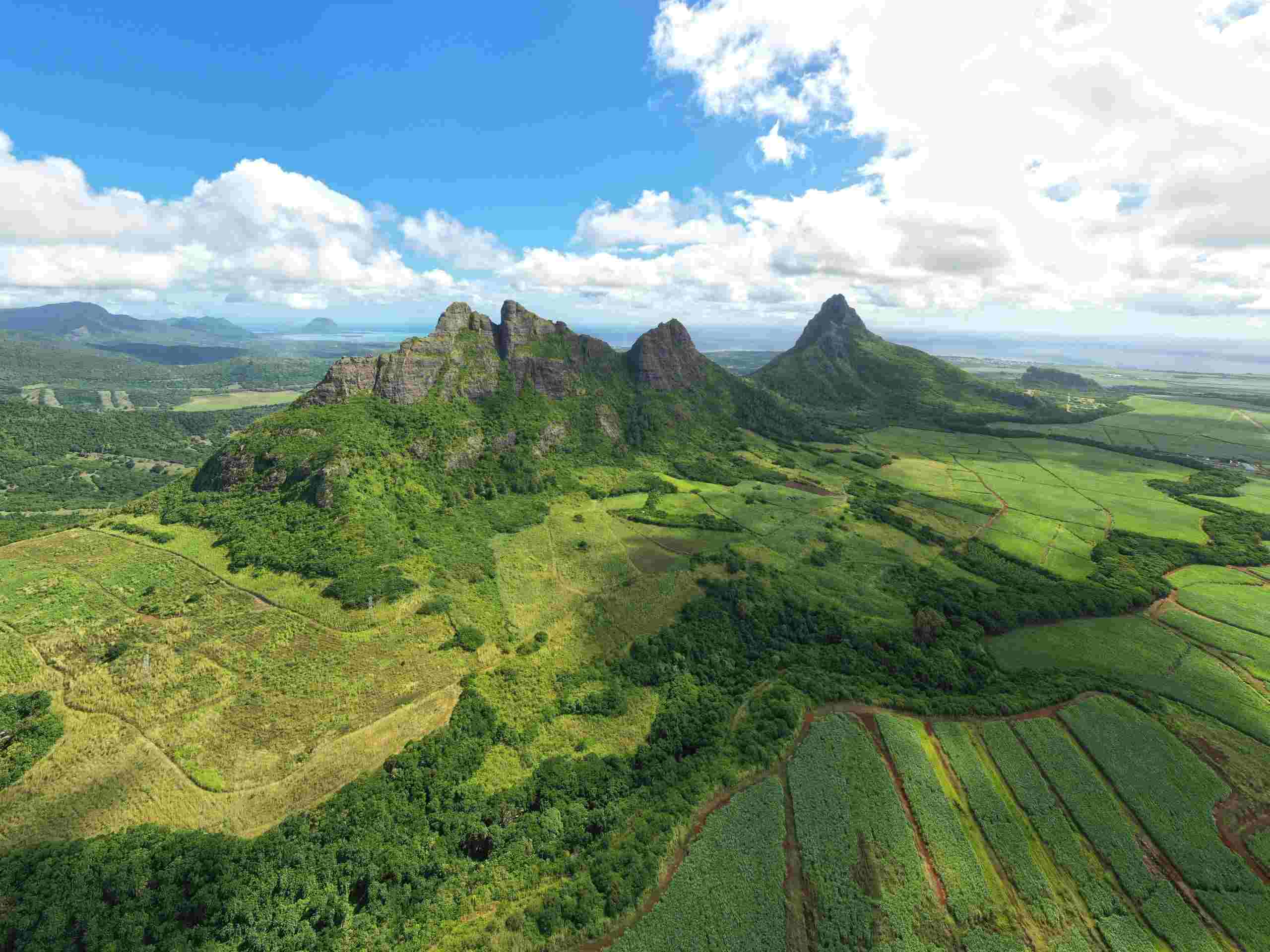
What kind of nature does Mauritius actually offer?
More than most people expect. Mauritius has a reputation as a beach-and-resort island, which it absolutely is. But inland, there’s a whole other side to it: ancient volcanic mountains, dense tropical forests, thundering waterfalls, and orchards you can walk right through. The interior of the island is one of the most underrated parts of any trip here, and it’s accessible whether you’re travelling with a toddler, a teenager, or just the two of you.
This guide covers the best nature experiences in Mauritius across every age group, so you can pick what works for your trip and skip what doesn’t.
The Mountains and the Black River Gorges
Best for: Couples, Older Kids 8+
The Moka Range and the Black River Gorges are the backbone of the island’s highlands. The gorges in particular form Mauritius’s only national park, covering around 6,500 hectares of forest that’s been protected since 1994. The peaks here aren’t Himalayan, but they’re dramatic. Le Pouce, at 812 metres, is one of the most popular summits and offers clear views of Port Louis and the coastline on a good day.
The trail up Le Pouce takes about 2 to 2.5 hours return from the base. It’s not technical, but it is steep in sections and involves loose rock toward the top. Good trail shoes are non-negotiable. Couples who are reasonably fit will find it entirely manageable. Older kids from around 8 upward can usually handle it with encouragement and regular water breaks. It’s not suitable for young children or anyone with mobility concerns.
For something more accessible, the viewpoints at Black River Gorges Visitor Centre require almost no walking and give you sweeping views over the gorge and forest canopy. This is a great option if you have mixed energy levels in your group.
Hiking Trails for All Levels
Best for: All Ages (trail dependent)
Beyond Le Pouce, there are trails ranging from gentle forest walks to full-day ridge hikes. The Macabé Trail in Black River Gorges National Park runs through native forest and is flat enough that it works for most fitness levels. You’ll hear endemic birds (the Mauritius kestrel is the famous one), and the forest feels genuinely wild.
For families with younger children, the Chamarel area has shorter, flatter walking paths near the Seven Coloured Earths geological site. The earths themselves are extraordinary: volcanic ash in seven distinct colours layered into dunes that don’t blend even after rain. It takes about 20 minutes to walk the viewing circuit, which is pram-friendly and fine for any age.
Waterfalls Worth the Trip
Best for: All Ages
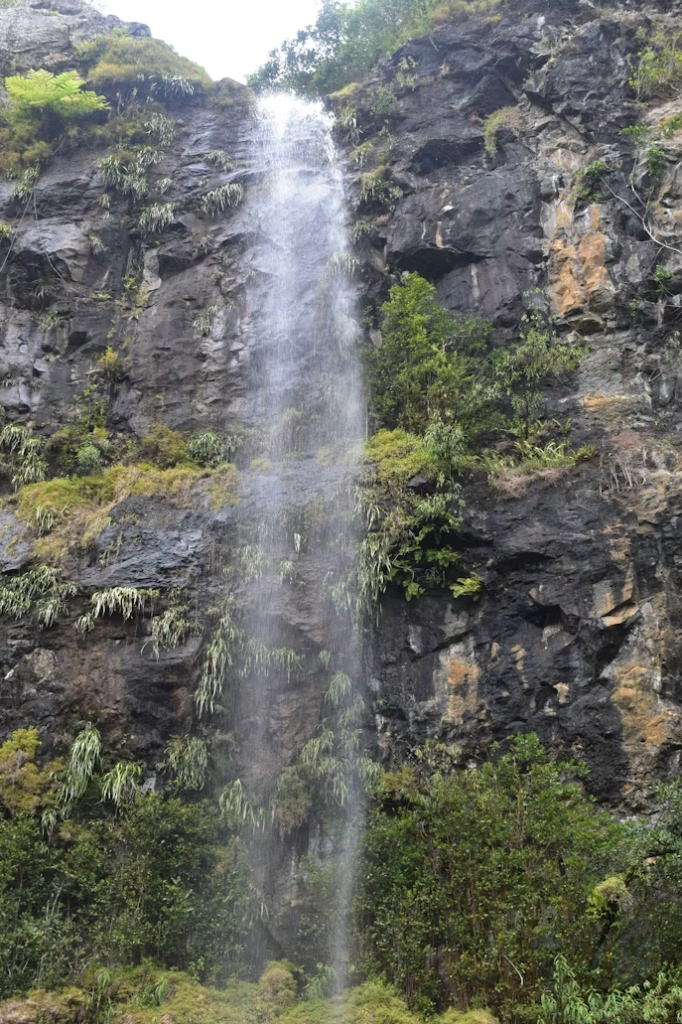
Chamarel Waterfall is the tallest on the island at around 100 metres, and it’s visible from a viewing platform without any serious hiking involved. The combination of waterfall, coloured earths, and the nearby Rhumerie de Chamarel distillery makes this corner of the southwest a full half-day in itself.
Rochester Falls in the south is a different experience entirely. The water flows over flat black basalt rocks in wide, even cascades rather than a single drop. It’s shallow enough in parts for children to wade in safely during dry season (roughly May to November). Getting there involves a 10-minute walk through sugarcane fields, which is part of the charm. Budget around $5 to $10 per person for the local guides who manage the site.
For something more dramatic, the Sept Cascades (Seven Cascades) at Tamarind Falls in the Henrietta region is considered the most spectacular waterfall experience on the island. Seven tiers of falls cascade through a deep jungle gorge, and the guided hike to reach the lower cascades takes around two hours return. The terrain is uneven and involves some scrambling, so it works best for adults and older kids who are comfortable on rough ground. The reward is worth it: you swim in a natural pool at the base with the falls thundering around you. Guided tours run from around $40 to $60 per person and include transfers from most hotels.
Fruit Picking and Plantation Visits
Best for: All Ages, especially great for Young Kids
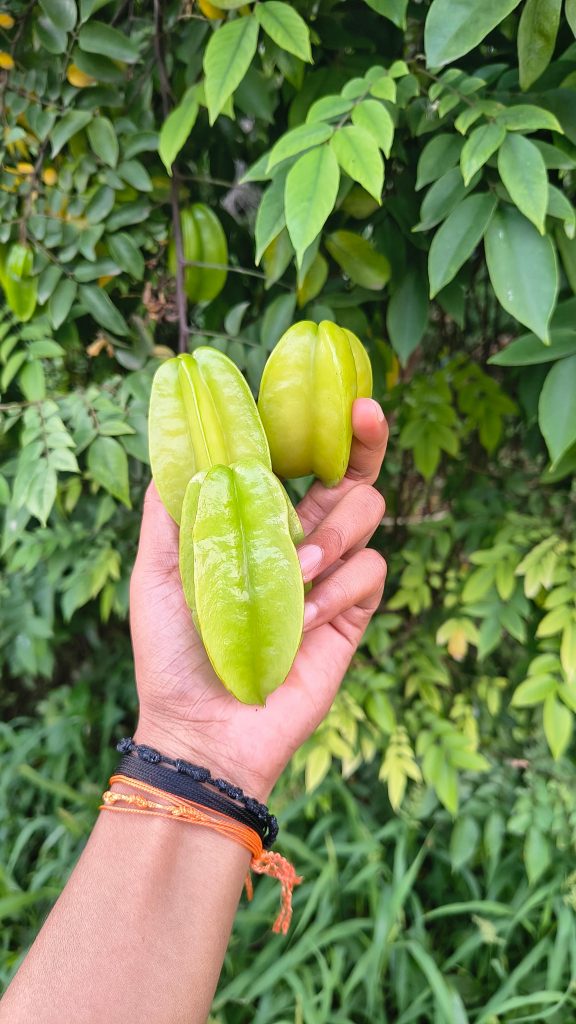
Mauritius grows lychees, mangoes, pineapples, papayas, and a variety of tropical fruits that you simply don’t get this fresh anywhere else. One local favourite worth knowing is goyave de chine, a small pink-fleshed guava that grows wild across the highlands and tastes unlike anything you’ll find at home. During season (roughly April to June), you’ll see it sold by the roadside in small bags for next to nothing. Several farms and agri-tourism estates in the highlands offer guided fruit picking experiences, typically running from around $15 to $25 per person including a tasting.
The Domaine de L’Etoile estate in the east combines fruit picking with quad biking, archery, and nature walks, making it one of the best single-venue options for families with kids of mixed ages. It’s a half-day activity and genuinely delivers for groups where not everyone wants the same thing. Young children love the picking itself. Older kids tend to head straight for the quads.
Visit between November and January for lychee season. Mangoes peak between October and December. Outside these windows, most farms still operate with whatever’s in season, but check ahead if you have a specific fruit in mind.
Sugarcane Fields, Tea Plantations and Working Estates
Best for: All Ages, Couples
Sugarcane covers roughly 75,000 hectares of Mauritius and is impossible to miss once you leave the coast. Driving through the central highlands between July and November, you’ll pass fields that stretch for miles in every direction, the cane growing to well over head height before harvest. Some estates offer guided tours that explain the full production process from field to rum, and the Rhumerie de Chamarel is the most visitor-friendly of these: the distillery tour costs around $15 per adult and ends with a tasting of their aged agricole rums. Non-drinkers and children are catered for with fresh sugarcane juice pressed on-site, which is genuinely delicious.
Tea is the other agricultural story worth seeking out. The Bois Chéri Tea Estate in the south is the oldest tea plantation in Mauritius, and their guided tour takes you through the processing factory, the drying rooms, and out into the plantation itself. You finish with a tasting on a terrace overlooking the fields and the southern coast. It costs around $10 to $15 per person including tea and biscuits. It’s a calm, unhurried couple of hours and works well for all ages, though younger children tend to enjoy the outdoor plantation walk more than the factory section.
Salt Making on the Coast
Best for: All Ages, Couples
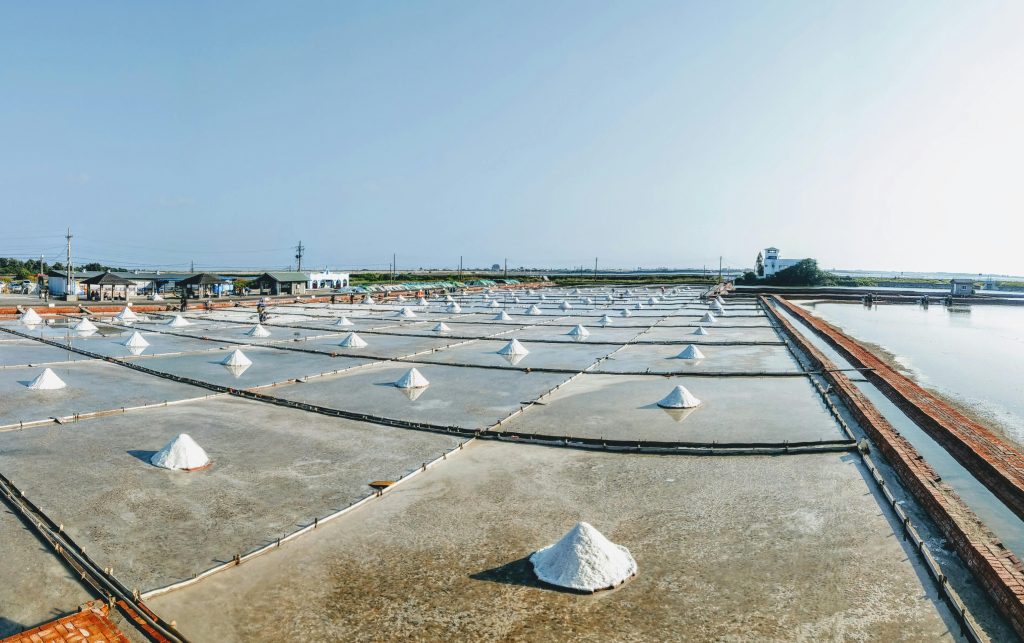
Salt production is one of the oldest industries in Mauritius and one of its most visually striking. The salt pans at Tamarin on the west coast and at Pointe aux Sables near Port Louis produce sea salt using the same traditional method that’s been used for generations: seawater is channelled into shallow clay pans and left to evaporate slowly in the sun, leaving behind large pink and white salt crystals. The pink colour comes from naturally occurring algae and is a sign of quality rather than processing.
There’s no formal tour infrastructure here, which is part of the appeal. You can pull up alongside the pans, watch the workers raking the crystals into piles, and buy bags of fresh salt directly from the producers for a couple of dollars. It’s a genuine slice of local life that most visitors never see, and the visual of the pink pans against the blue sky photographs beautifully. Tamarin is the easier of the two to visit as it’s close to several popular beaches on the west coast, making it a natural addition to a beach day.
Other Nature Worth Your Time
Best for: All Ages
The Pamplemousses Botanical Garden in the north is one of the oldest tropical gardens in the southern hemisphere. The giant Victoria amazonica lily pads are the headline act, and children find them genuinely astonishing. Entry is free, which makes it an easy add-on to a transfer or a northern beach day. Plan for about an hour to 90 minutes.
For marine nature, a glass-bottom boat trip or a snorkel over the Blue Bay Marine Park in the southeast gives you reef fish, sea turtles, and coral that’s been well-protected compared to other parts of the island. Blue Bay is calm and relatively shallow, which makes it ideal for children who are new to snorkelling. Worth knowing: many resort hotels include complimentary glass-bottom boat trips as part of their water sports offering, so check with your hotel before booking anything independently. Standalone trips run daily from the beach and typically cost $20 to $40 per person.
Ile aux Aigrettes, a small coral island off the southeast coast, is a conservation reserve for Mauritian wildlife including giant Aldabra tortoises. The guided 90-minute tour is run by the Mauritian Wildlife Foundation and costs around $30 per adult. Children under 10 are typically half price. It’s one of the most educational nature experiences on the island and works surprisingly well even for young kids who will remember the tortoises long after they’ve forgotten the beach.
Practical Notes Before You Go
Most nature sites are accessible by car, and hiring a vehicle for a day or two is the most practical way to reach the highlands and south. Rental cars start from around $40 to $60 per day. For hiking, the cooler months of June through September offer the most comfortable conditions. The wet season (November through April) brings heavier rain and occasionally closes trails, but also fills the waterfalls to their most dramatic. Wear light layers even in the highlands as the temperature drops noticeably from the coast. Find out the month-by-month breakdown in our post here.
Mauritius rewards the travellers who get off the beach for at least one day. The nature here is genuinely diverse and genuinely beautiful, and most of it is far easier to reach than people assume.