
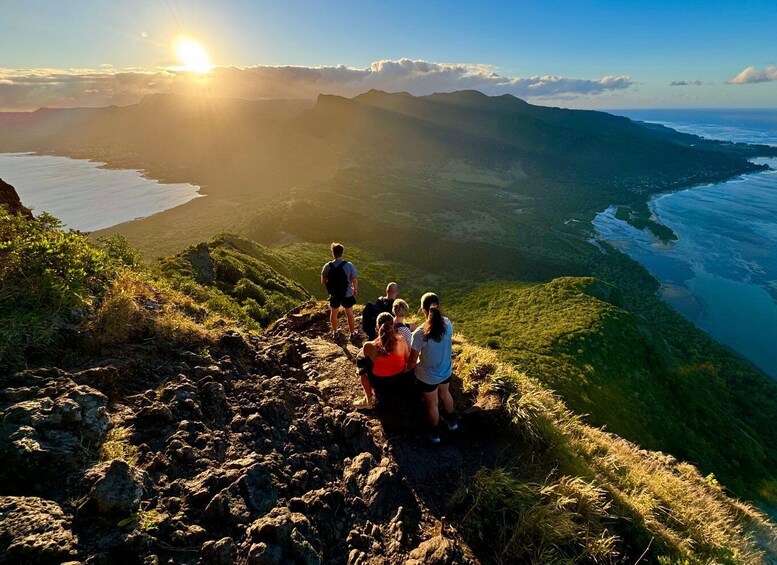
Is Le Morne Worth Visiting?
Yes. Le Morne is one of the most striking places in Mauritius and worth making time for, even on a short trip. The area in the southwest of the island is visually dramatic, carries genuine historical weight, and sits beside some of the best kite-surfing water in the Indian Ocean. Whether you hike it, watch it from the beach, or simply stop to understand what happened here, it leaves an impression.
Most visitors to Mauritius stay at beach resorts and never venture beyond the pool. That’s understandable. But Le Morne is different enough from the rest of the island that skipping it entirely feels like a missed opportunity, especially if history or scenery matters to you.
What Is Le Morne, Exactly?
Le Morne is the name of the area at the southwestern tip of Mauritius. At its heart is Le Morne Brabant, a 556-metre basalt peninsula that rises sharply from the sea. The entire area was inscribed by UNESCO as a World Heritage Site in 2008 under the name Le Morne Cultural Landscape, recognising it as a symbol of slave resistance across the Indian Ocean region.
During the 18th and early 19th centuries, the caves and dense forest near the summit of Le Morne Brabant provided shelter for escaped enslaved people, known as maroons. According to local oral tradition, when soldiers approached the mountain in 1835 to inform those in hiding that slavery had been abolished, the escaped slaves misread the approach as capture and jumped to their deaths. It’s a painful story, and it gives the place a weight that goes beyond the scenery.
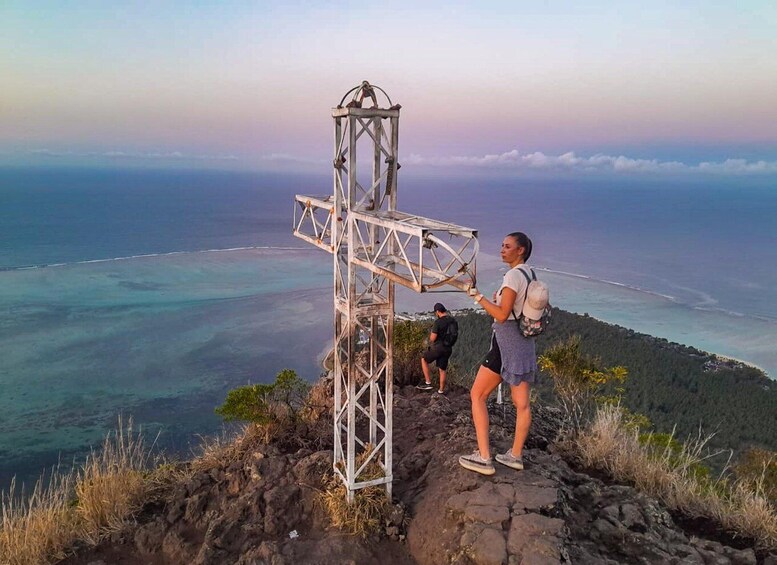
That history is commemorated today by the Slave Route Monument at the base of Le Morne Brabant. It’s worth visiting before you do anything else. More on that below.
How to Get to Le Morne
Le Morne is about 60 kilometres southwest of Port Louis and roughly 35 kilometres from the airport. The easiest way to get there from most beach resorts is by car or taxi. Expect around 45 minutes to an hour depending on where you’re based.
Public buses connect to the area but are slow and infrequent. If you’re staying on the west coast or in the south, a rental car or private transfer is the practical option. A return taxi ride from the Flic en Flac area costs around $30 to $40 USD. From a Grand Baie resort in the north, budget closer to $70 to $90 USD for a private return transfer.
Guided day tours that include Le Morne alongside other southwest highlights are available, typically priced between $40 and $80 USD per person depending on what’s included.
Check the activities in Le Morne here.
Can You Hike Le Morne Brabant?
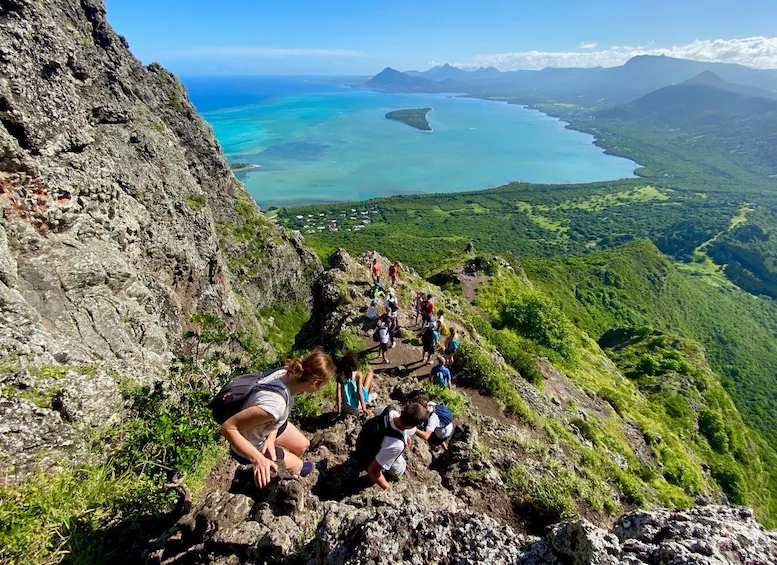
You can, but it requires some preparation. The trail to the summit of Le Morne Brabant is steep, takes around two hours return, and involves scrambling near the top. You’ll need decent shoes, plenty of water, and a reasonable level of fitness. The views from the top over the lagoon and the island’s southwest coastline are genuinely spectacular.
The catch: independent hiking on Le Morne Brabant has historically been restricted or regulated, and the situation changes. At various points, access has required permission from local landowners or a registered guide. Before you go, check the current rules and book a licensed guide if required. Going with a local guide is a good idea regardless. They’ll explain the history properly, which makes the climb considerably more meaningful.
If hiking isn’t for you, the view from the beach at the base is still excellent. You don’t need to reach the summit to feel the scale of the place.
The Slave Route Monument: No Hiking Required
Right at the base of Le Morne Brabant, on the coastal road that wraps around the peninsula, sits the Slave Route Monument. It’s one of the most meaningful stops in Mauritius and you don’t need to hike a single step to reach it.
The monument is a landscaped open-air park containing stone sculptures from countries across the Indian Ocean slave trade network. Each piece was created by an artist from a different affected nation, so the works vary considerably in form, but they share a common intent: to acknowledge the people who were taken, traded, and enslaved across this region. The sculptures overlook Le Morne Brabant directly. It’s a deliberately powerful juxtaposition.
Explanatory panels in English and French walk you through the history and the individual pieces. Budget around 30 to 45 minutes to do it properly. The park is well maintained, entry appears to be free, and there’s parking directly across the road at the public beach.
Opening hours: Monday to Friday 9:30am to 3:30pm, Saturday until 3:00pm, Sunday until 12:00pm. Arrive before noon on a Sunday if you want to be sure it’s open. It’s closed on public holidays, so worth checking ahead if your visit falls on one.
The approach road is part of the experience. The B9 coastal route hugs the cliffs around Le Morne Brabant with views over the turquoise lagoon on one side and dramatic basalt rock formations on the other. Even a slow drive around the headland is worth doing before you stop.
Maconde Viewpoint: The Best View of Le Morne Without the Hike
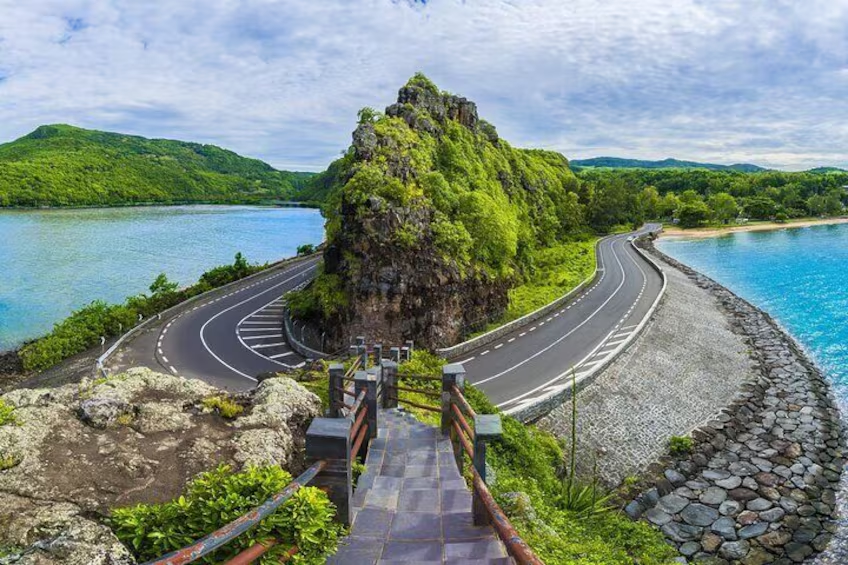
A few kilometres along the B9 coastal road, on the way to or from Le Morne, Maconde Viewpoint is the single best place to see Le Morne Brabant in full. It’s a roadside stop with a short set of stairs to a platform at the top, takes about 15 minutes, and costs nothing. Over 1,900 Google reviews give it a 4.6 rating. It’s popular for good reason.
From the top, you get a panoramic sweep across Le Morne Brabant, the turquoise lagoon, the winding coastal road, and the green valleys rolling inland. Every direction produces a postcard shot. If you’re worried about heights, this is actually an ideal alternative to the full mountain hike: you get the perspective and the scale without any of the steep scrambling.
The viewpoint is open 24 hours, so sunrise and sunset visits are both possible. Sunrise is quieter and the light on Le Morne Brabant at that hour is particularly good. There are sometimes fruit sellers near the stairs during the day. No ticket, no gate, just park and climb.
If you’re combining Le Morne with a southwest day circuit, Maconde fits naturally as a 15-minute stop either before or after the Slave Route Monument, since both sit along the same B9 road.
What Else Is There to Do at Le Morne?
The beach at the base of Le Morne Brabant is one of Mauritius’s finest: long, uncrowded by island standards, and facing a shallow turquoise lagoon. The consistent south-easterly trade winds make this the island’s prime kite-surfing location. Several schools operate on the beach, including Kite Lagoon and ION Club. Lessons start at around $80 to $100 USD for a two-hour session. Equipment rental is available if you already know what you’re doing.
Even if you’re not kitesurfing, watching from the beach is genuinely entertaining. The water is clean and calm inside the lagoon, and the combination of mountain, reef, and turquoise water in one frame is hard to beat for a photograph.
A handful of beach restaurants and shacks near the peninsula serve grilled seafood and local food at reasonable prices. Lunch for two with drinks runs around $25 to $40 USD. Nothing fancy, but fresh and good.
Best Time to Visit Le Morne
Mauritius is warm year-round, but the southwest is sunnier and drier between May and November. During the summer months (December to March), the southwest catches more rain and the occasional cyclone. If you’re planning specifically around Le Morne, aim for June through October for the clearest skies and best kite-surfing conditions.
Mornings are better for hiking. By midday the heat can be intense, and afternoon cloud often settles around the summit of Le Morne Brabant. Get there early if you’re planning to go up.
Practical Tips Before You Go
- Maconde Viewpoint is on the same B9 road and open 24 hours. Add it as a 15-minute stop before or after the monument. Free to enter, short staircase to the platform.
- The Slave Route Monument is open 9:30am to 3:30pm on weekdays. On Sundays it closes at noon, and it may be shut on public holidays. Check before you go.
- Wear sunscreen and bring more water than you think you’ll need, especially for the hike.
- There’s very limited shade on the approach to the trail. A hat is not optional.
- The memorial at the base is a serious historical site. Treat it accordingly.
- If you’re combining Le Morne with other southwest sights (Black River Gorges, Chamarel), allow a full day.
- Some kite schools require advance booking during peak months (July to August). Book at least a week ahead if you’re travelling in high season.