
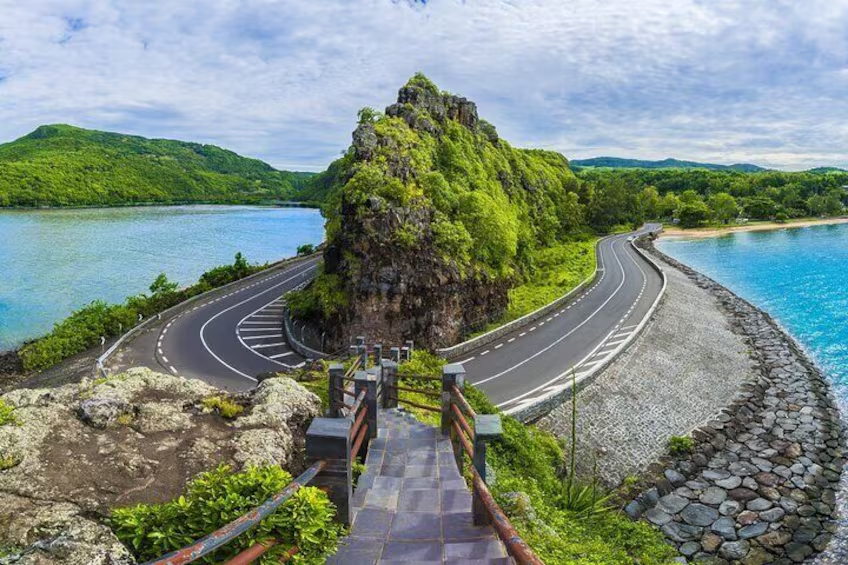
Mauritius photographs better than almost anywhere else in the Indian Ocean. Here’s where to actually go, broken down by location.
Is Mauritius as photogenic as it looks online?
It earns every pixel. The combination of turquoise lagoons, volcanic interiors, colonial architecture, and dense green forest means Mauritius delivers genuinely varied shots within a single trip. You don’t need a drone or professional gear. Most of the spots here are accessible by car and worth visiting on their own merits, not just for the photo.
The island is divided into four distinct regions, each with its own character: the north, the west, the south and the east coast. Structure your days around one region at a time rather than criss-crossing the island, and you’ll cover the best photo spots without exhausting yourself.
North Mauritius
Pamplemousses Botanical Garden
The oldest botanical garden in the southern hemisphere, and one of the genuinely beautiful places on the island. The giant Victoria Amazonica water lilies are the shot most people come for. They sit in a dark pond surrounded by mature trees, and the contrast is striking on a bright morning. Arrive before 9am to get the lily pads without a crowd in frame. Entry is free.
Beyond the pond, the alley of talipot palms is the other image worth pausing for. A row of towering palms lines a formal avenue and gives the place an almost cinematic quality. Wear shoes you don’t mind getting muddy if it’s rained recently.
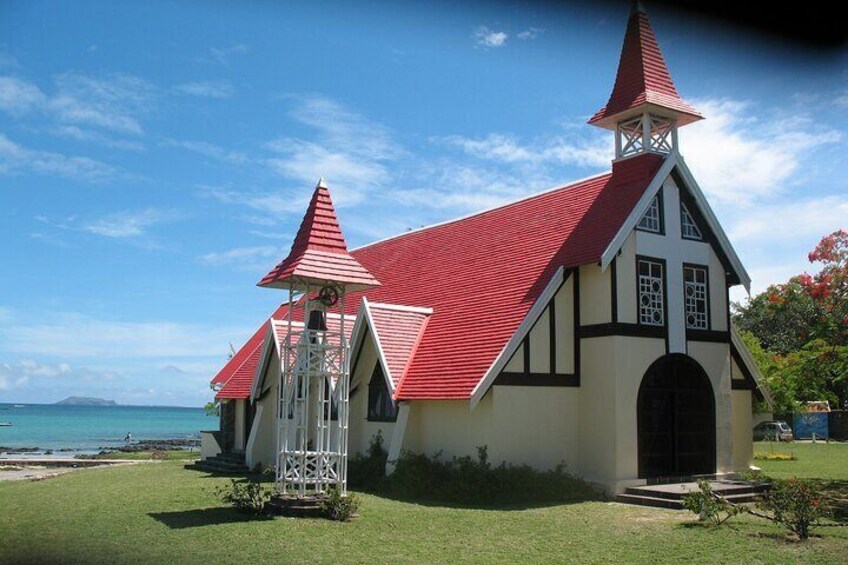
Notre-Dame Auxiliatrice de Cap Malheureux
The little red-roofed church against a backdrop of the sea and Coin de Mire island is one of the most reproduced images of Mauritius for good reason. It’s a five-minute stop, and the shot works best in the morning when the light is behind you. The surrounding fishing village is worth a slow walk around afterwards.
West Coast
Black River Gorges National Park
The interior of Mauritius is undershot compared to its beaches, which is exactly why it photographs so well. Black River Gorges covers nearly 7,000 hectares of native forest, and the viewpoints over the gorge are extraordinary on a clear day. The Gorges Viewpoint off the B103 road gives you the widest panorama and requires no hiking to reach.
If you’re willing to walk, the trail to Alexandra Falls takes about 40 minutes round trip and ends at a waterfall dropping into a forested ravine. Bring a waterproof jacket. The park changes fast when cloud comes in from the south.
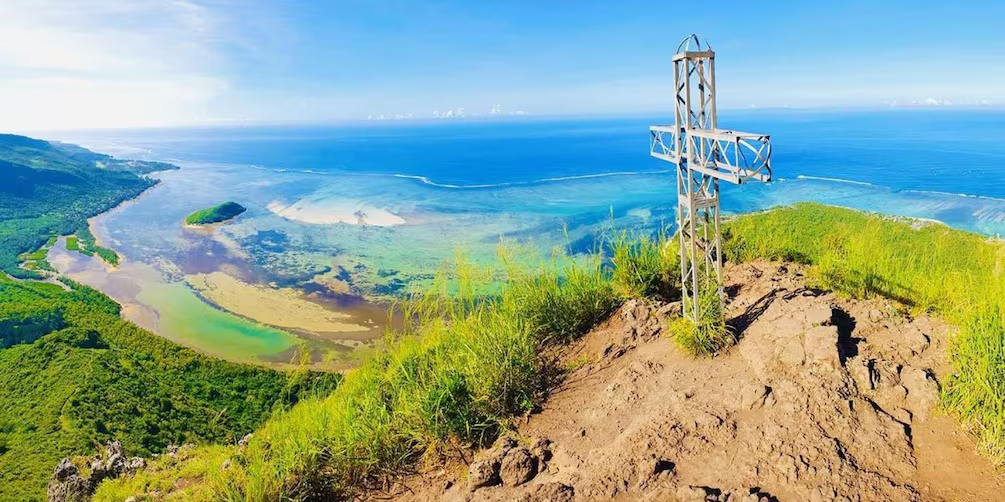
Le Morne Brabant
The basalt peninsula at the southwestern tip of the island is a UNESCO World Heritage Site, and from the right angle, it’s one of the most dramatic landscapes in the Indian Ocean. The mountain rising steeply from the lagoon, surrounded by water on three sides, looks almost unreal in the late afternoon light.
You don’t need to climb it for a great shot. The beach at Le Morne village gives you the full profile of the peninsula with the turquoise shallows in the foreground. Early morning or an hour before sunset are the windows you want.
South Mauritius
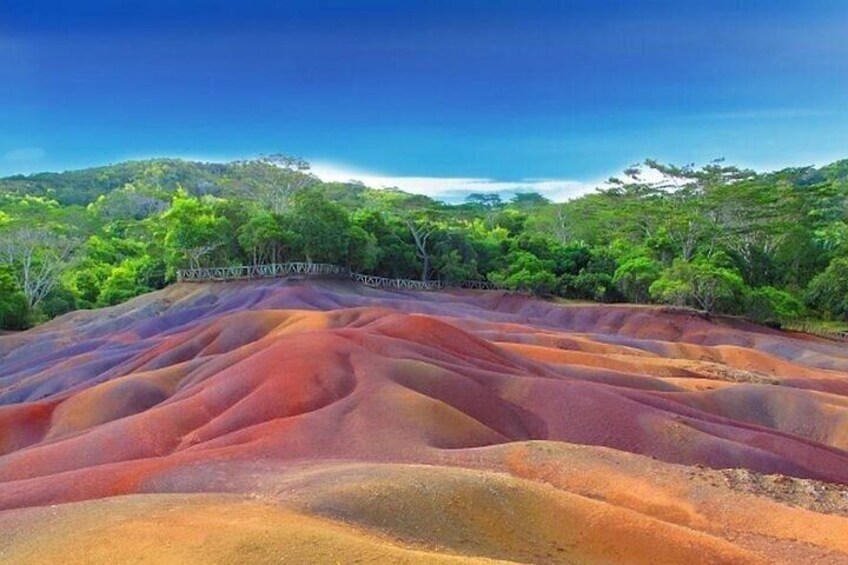
Chamarel Seven Coloured Earth
The duned section of volcanic soil in different shades of red, brown, violet, green and blue sits inside a small geopark near Chamarel village. The colours come from cooling lava cooling at different temperatures. Late morning light saturates the reds and purples most clearly. In the late afternoon, the lower angle softens the contrast but brings out the brown and ochre tones more warmly. Entry is around $10 per person.
Chamarel waterfall is a few minutes’ drive away and included in the same geopark ticket, so no separate entry is needed. At 100 metres it’s the tallest waterfall on the island, and the spray carries well, so keep your lens clean.
Rochester Falls
Less visited than Chamarel and arguably more photogenic for it. The falls drop over flat basalt columns into a wide pool, and the geometric rock formations are unlike anything else on the island. There’s no formal entrance fee. A short dirt trail leads down from the roadside parking, dropping you right alongside the falls and the basalt columns at water level. It’s slippery after rain, so take your time on the descent.
East Coast
Ile aux Cerfs
A small island off the east coast accessible by a short boat transfer from Trou d’Eau Douce (about $8 round trip). The lagoon between the mainland and the island is among the clearest water you’ll find in Mauritius, and the sandbar that extends from the southern tip is best captured from the water, where the shifting shades of turquoise and white sand read beautifully from close range. Glass-bottom boat trips let you see the reef below without getting in.
Mahebourg Waterfront
The seafront promenade in the old colonial town of Mahebourg gets far less camera attention than the beaches, and that works in your favour. The iron street lamps, the coloured fishing boats, the Ile aux Aigrettes in the distance, and the calm water of the lagoon combine into something that doesn’t look like every other Mauritius shot. The best light is in the late afternoon when the sun is behind the land mass and the water turns gold.
Practical Notes
Mauritius is a small island but the roads between regions take longer than expected. Allow around 45 minutes between the north and west, an hour from the west to the south coast. A hire car gives you full flexibility and costs around $40 to $60 per day from the major agencies at the airport.
The island’s two best photography seasons are May to August (cool, clear skies, low humidity) and October to November (before the wet season, lush and green). December to March brings cyclone season and heavy downpours, though the light between storms can be dramatic.
For any of the viewpoint locations, mid-week mornings will give you the clearest shots with the fewest people in frame. Weekends draw local visitors to the beaches, particularly on the north and west coasts.
Planning your stay in Mauritius? Browse recommended hotels for your Mauritius trip