
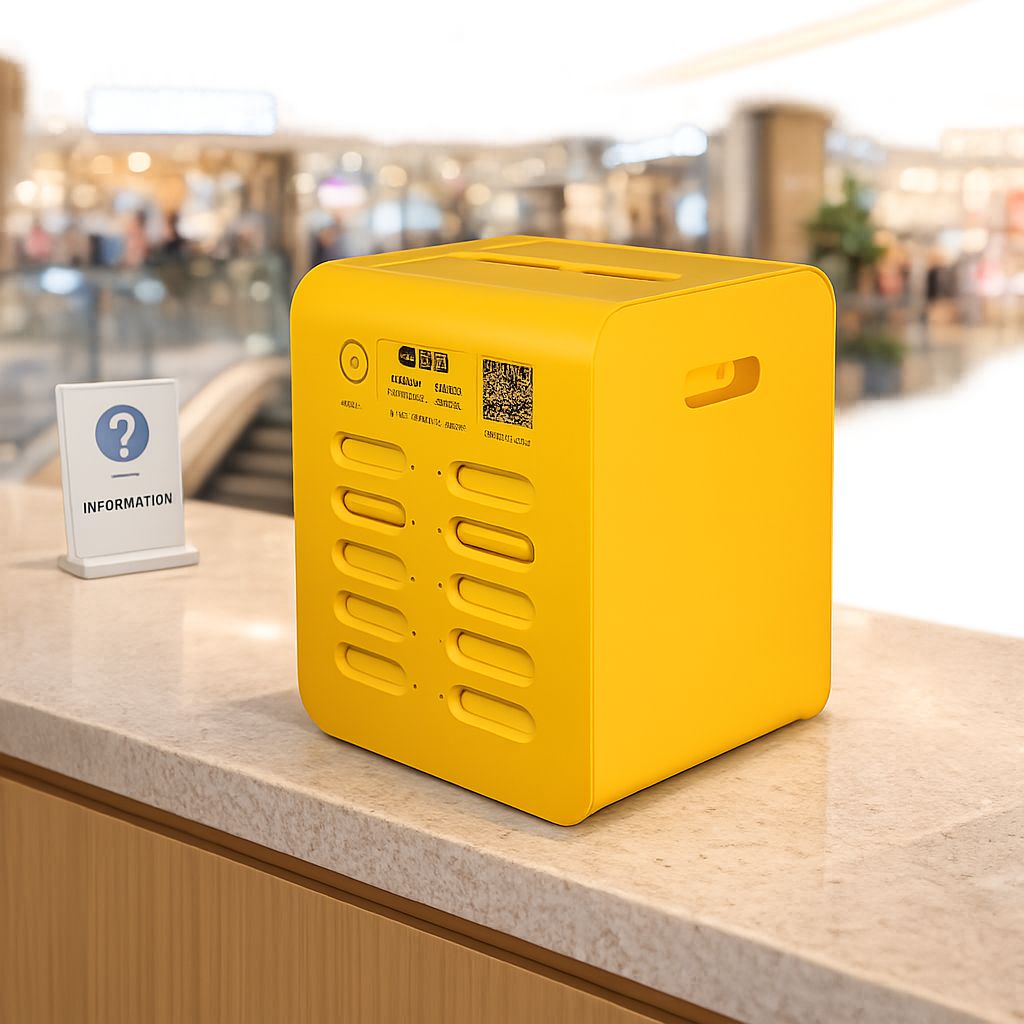
Can you rent a power bank in China?
Yes, and it’s one of the easiest things about travelling here. Shared power bank stations sit at the entrance of many convenience stores, malls, restaurants and transport hubs across China. You scan a QR code, the bank pops out, and you’re charging your phone within seconds.
I used this exact system in Guangzhou, and it solved a problem I hadn’t even thought to plan for.
What to know about flying with a power bank
Power banks must be carried in your cabin baggage and cannot be packed in checked luggage. Most travel-sized power banks fall within airline limits, but larger models may require approval or be prohibited altogether. If you don’t want to worry about the rules, renting one after arrival is an easy alternative.
How the rental system actually works
You’ll usually need to register through Alipay or WeChat before renting your first power bank. Search for the provider’s mini-program: Energy Monster, JieDian, Meituan Charging and Xiaodian are the big national names. Alipay generally offers the best English-language experience, while translation support in WeChat mini-programs varies by provider. Either way, the kiosk’s own screen is Chinese-only, but you won’t need to read it since the rental happens through the app.
Depending on the provider and payment platform, you may be asked for a refundable deposit, often around ¥99 (about $14 USD). Travellers using newly set up accounts are more likely to encounter this requirement than long-term Alipay or WeChat users.
Once you’re set up, use the app to find the nearest station, then scan the QR code on the kiosk. Grab the power bank when the slot releases. Most come with built-in charging cables, often including USB-C, Lightning and Micro-USB connectors. You won’t need to bring your own cable for this.
Prices vary by provider but are generally inexpensive, often adding up to just a few US dollars for a full day of use. For a family out exploring all day with three phones running maps, translation apps and cameras, that’s cheap insurance against a dead battery at the worst moment.
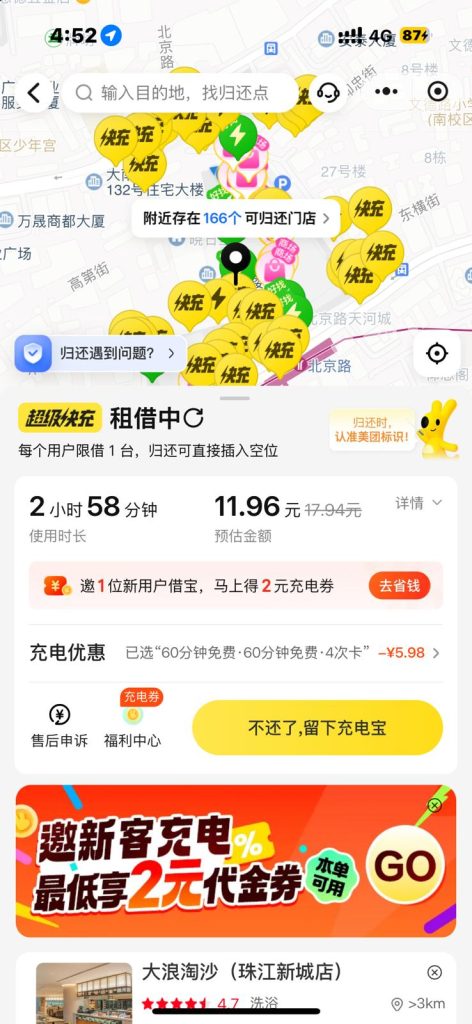
Returning it (or not)
Drop the power bank into a kiosk for the same provider, ideally one that’s actually free. The app shows you nearby stations, but the closest one isn’t always usable: it might be full, or turn out to be a smaller partner location with limited slots. Check a couple of options on the map before heading out.
Here’s the part most guides don’t mention: any deposit you paid sits with the provider until you return the unit. It usually isn’t a separate late fee on top of the rental charges; instead, you’ll be billed up to the provider’s maximum charge for an unreturned device.
The bottom line
If you’d rather avoid carrying an extra power bank or navigating airline battery rules, China’s rental system is an easy backup plan. Land, scan, charge, and return it when you’re done. Just remember that failing to return it may result in being charged for the device itself.
Browse recommended hotels for your trip and have a read on our recommended things to do in Guangzhou with kids.