
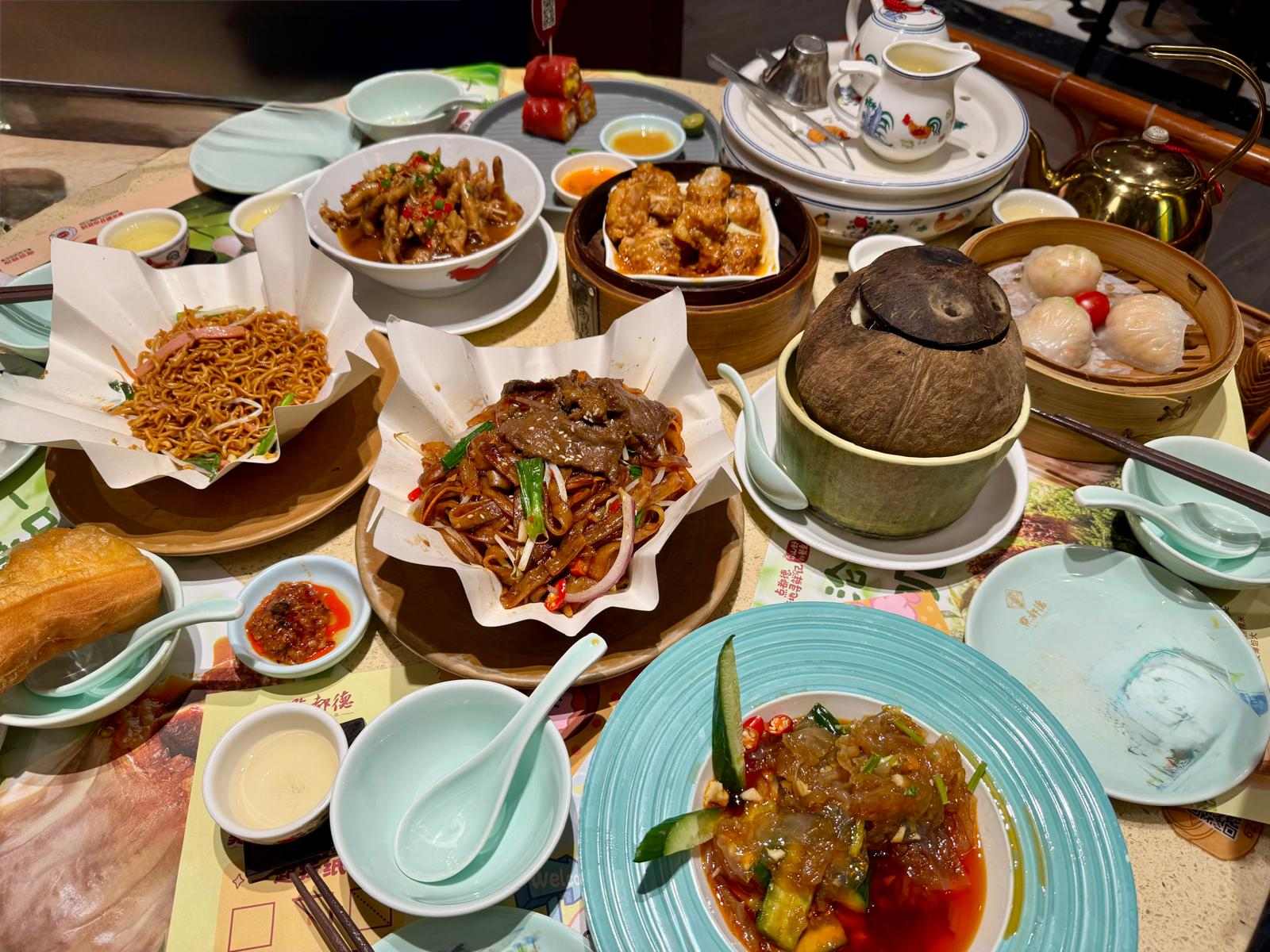
Guangzhou doesn’t need a food scene reputation. It built one over a thousand years and the rest of China still comes here to eat. The question isn’t whether the food is good. It’s knowing which dishes, and which spots, are actually worth the queue.
What Food Is Guangzhou Most Famous For?
Guangzhou is the birthplace of Cantonese cuisine and arguably the best city in China to eat dim sum, roast meats, and fresh seafood. The city eats seriously. It’s common for locals to queue 30–60 minutes for a restaurant that’s considered exceptional, even on weekday mornings. Meals here are long, loud, and ordered in rounds. Budget around $8–20 per person for a proper sit-down meal at a heritage restaurant, less at a market stall.
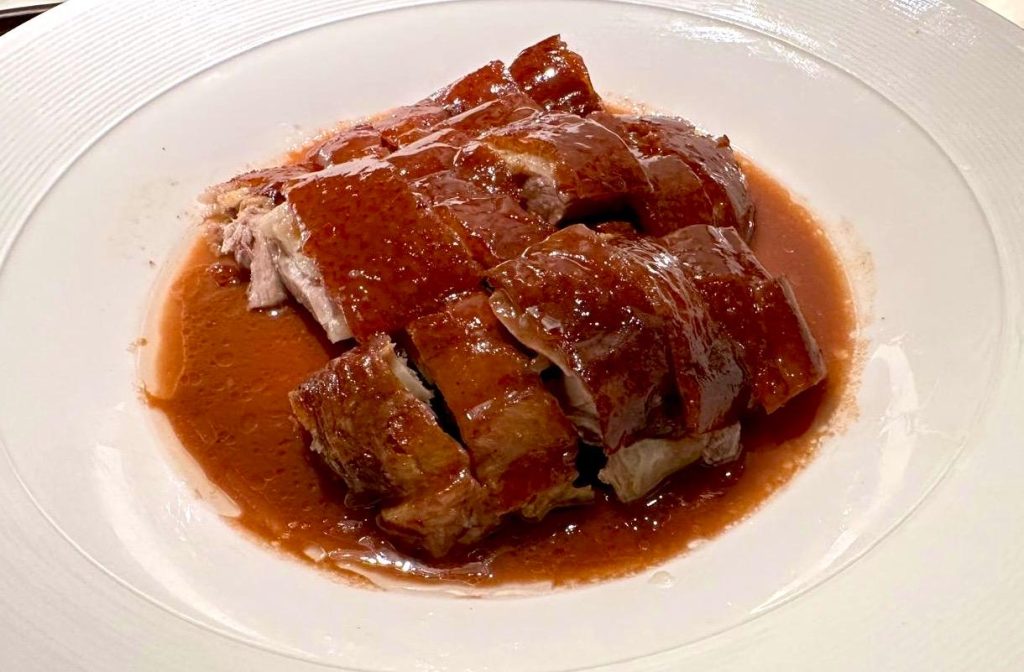
Roasted Goose
Roasted goose is one of Guangzhou’s signature dishes and among the best you’ll find anywhere in China. The skin lacquers to a deep mahogany, the meat stays juicy right to the bone, and a good version needs nothing more than the plum sauce or roasting juices it comes with. Eat it the moment it arrives. It doesn’t improve as it cools.
Taotaoju, open since 1880 in the Liwan District, is where I had the best roasted goose of the trip. Order a half portion (around $8–12 USD). They also do excellent Cantonese dim sum if you want to make it a full morning. Go early or expect a wait.
Red Rice Roll
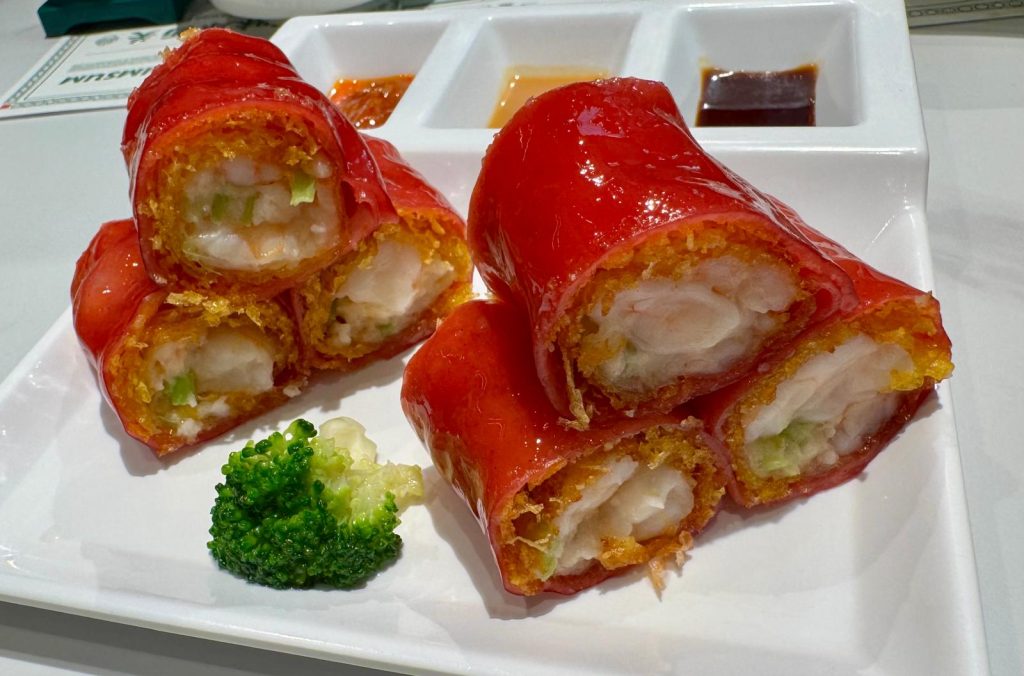
The red rice roll (hongmichang) is unlike anything else you’ll find in a dim sum spread. A crispy prawn filling wrapped in crunchy fried dough, then rolled in a chewy red rice wrapper. It comes with two sauces: a rich sesame sauce that complements the roll perfectly, and a lighter soy dip with cilantro and lime. Use both.
Dian Dou De is the place to try it. It’s a chain with outlets across the city, many inside shopping malls, which makes it easy to find. One order runs around $3–5 USD. It’s a snack more than a main, but it’s the kind of thing you’ll want twice in one trip.
Fried Silky Tofu
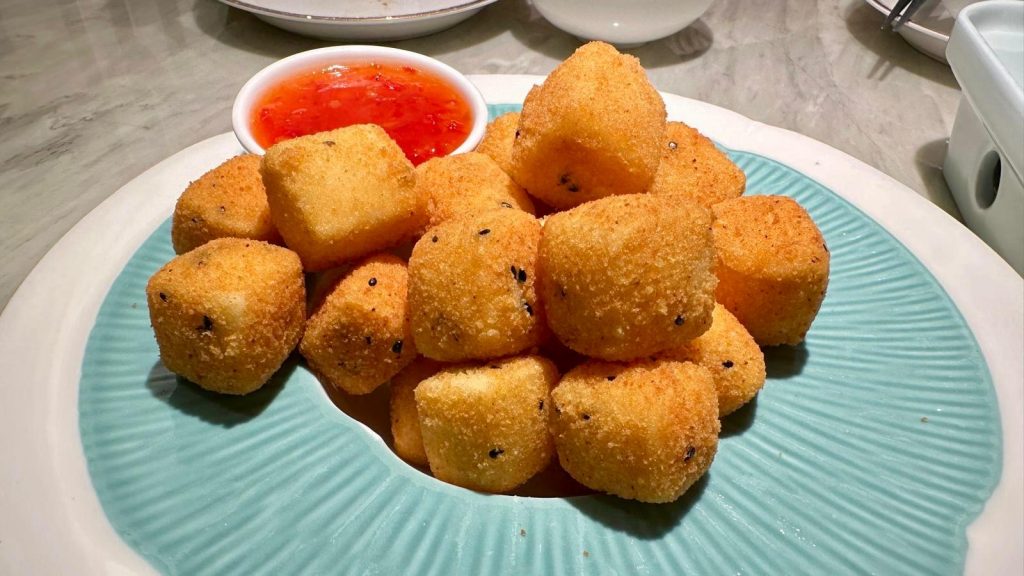
Don’t let the simple name fool you. This is one of those dishes that disappears from the table almost immediately. Cubes of silky tofu are lightly coated and deep-fried until the outside turns crisp and golden while the inside stays smooth, creamy and almost custard-like. The contrast in texture is what makes it so addictive. Most restaurants serve it with sweet chilli sauce for dipping, although it’s just as good eaten on its own while it’s still piping hot.
You’ll find fried silky tofu at many Cantonese restaurants, especially those serving family-style meals. It makes an excellent side dish to balance richer roast meats and seafood. A generous plate usually costs around US$4–7, making it one of the best-value dishes on the menu.
Roasted Pigeon
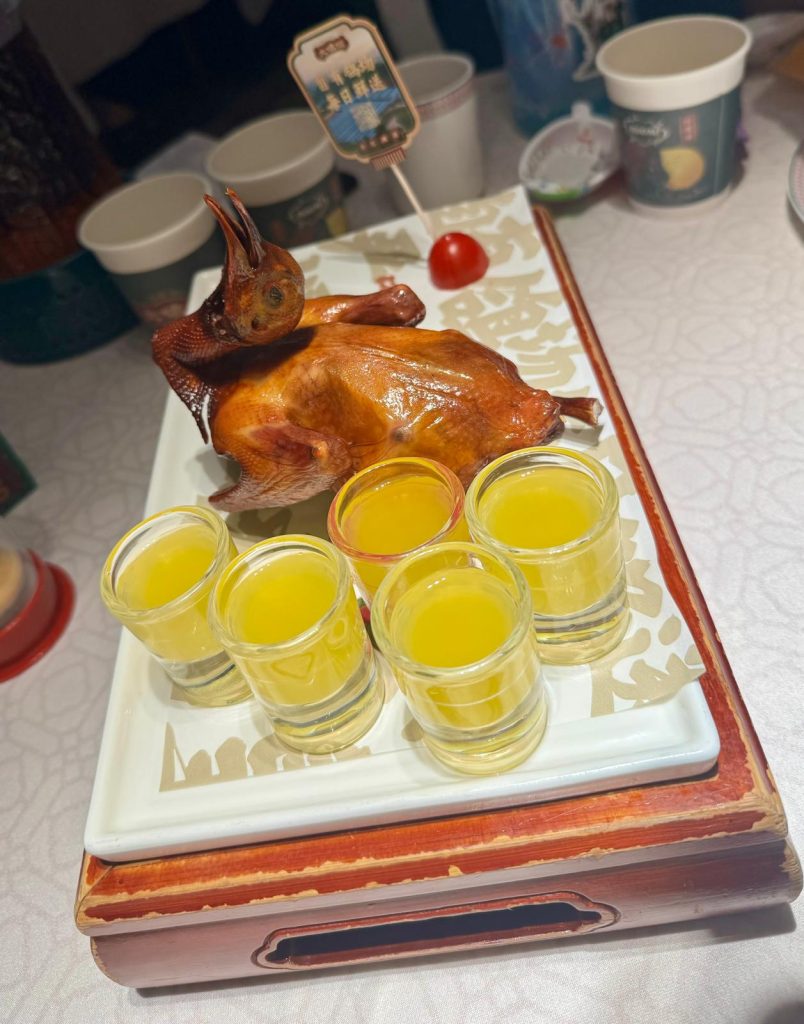
Cantonese roasted pigeon is a dish Guangzhou takes seriously, and once you’ve had a good one you’ll understand why. The skin crisps up dark and tight, the meat stays rich and slightly gamey close to the bone. It’s eaten with your hands, and many restaurants provide disposable gloves in different sizes for men, women, and kids.
Da Ge Fan is where I had mine. The pigeon is well-presented, and the staff will cut it at the table in front of you. A small shot of fruit juice comes with it to cleanse the palate between bites, a thoughtful touch that works better than it sounds. It’s a Michelin Bib Gourmand restaurant on Beijing Road with a following to match, so arrive early or grab a queue number. Each bird runs around $7 USD.
Black Char Siu
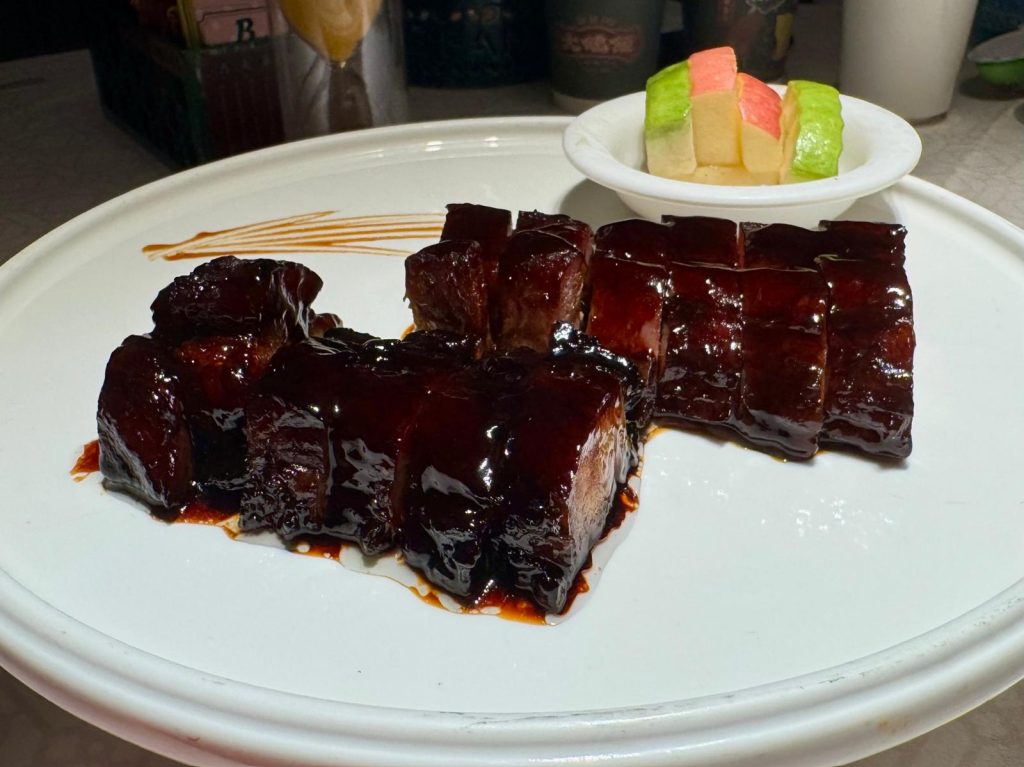
Black char siu is Cantonese barbecue pork at its richest and most flavourful. Thick slices of pork are marinated with soy sauce, fermented bean curd, sugar, and maltose, then roasted until the edges caramelise into a deep mahogany, almost black crust. Despite the colour, it’s not burnt. The repeated glazing creates a sticky, smoky exterior while the meat inside stays tender and juicy. It’s sweeter than many Western barbecue styles, but balanced by the savoury marinade. I had it at Da Ge Fan, and it was served with a side of fresh assorted fruits seasoned with sour plum, striking a perfect balance.
Guangzhou’s roast meat shops (siu mei shops) are among the best places to try it, though many Cantonese restaurants also serve excellent versions. Order it on its own, with steamed rice, or as part of a roast meat platter alongside roast goose or crispy pork. Expect to pay around US$5–9 for a portion, or US$3–5 if it’s served over rice as part of a set meal.
Sauerkraut Fish (Suan Cai Yu)
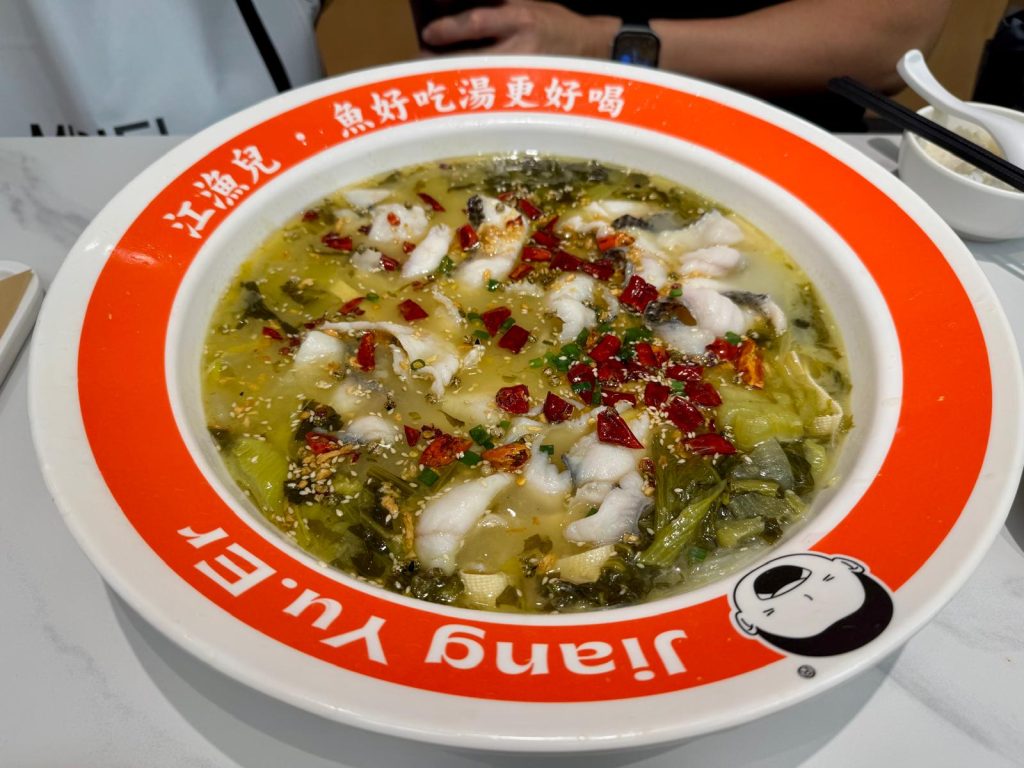
Strictly speaking, this is a Sichuan dish. But it has become hugely popular across Guangzhou, and the version you find here varies by restaurant. The classic is a sour, clear broth with tender white fish fillets and pickled mustard greens. Some versions come with a touch of chilli for heat, others are mild, and some restaurants serve it in a tomato-based broth instead. All of them work. Order steamed white rice on the side and don’t skip the broth.
It’s widely available at mid-range restaurants across the city. Expect to pay $8–12 USD for a full pot that feeds two comfortably.
Crispy Deep-Fried Pork Strips
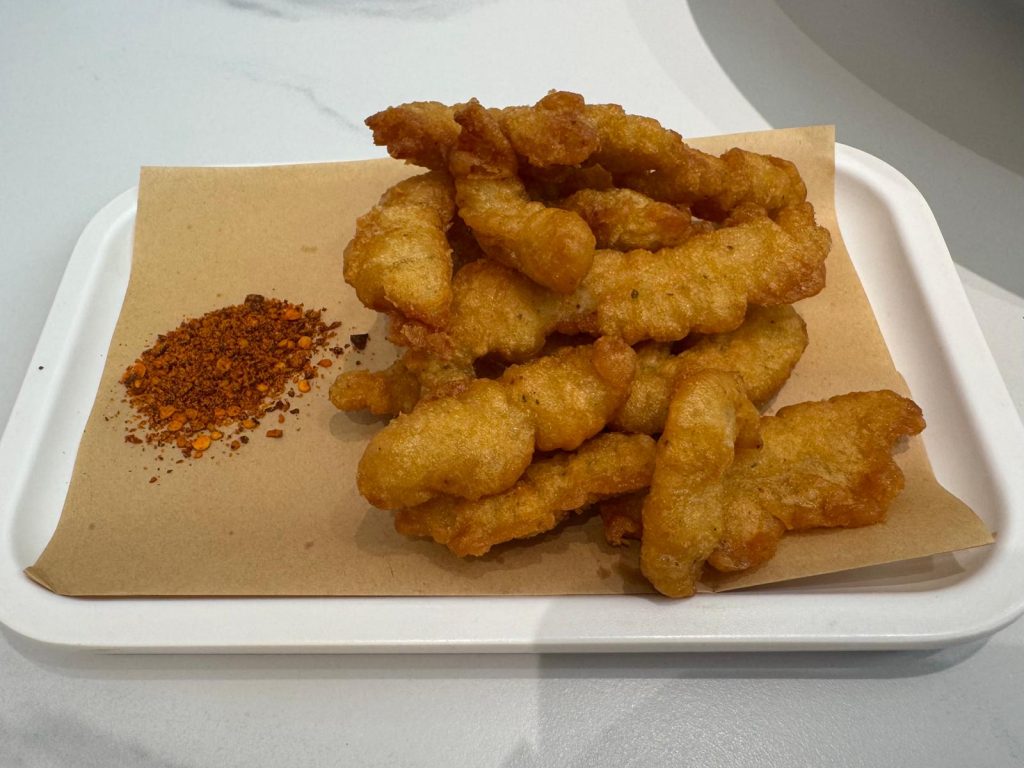
This is deep-fried pork at its best: strips of pork with the skin battered and fried to a full crunch. It arrives with a side of dried chilli flakes for dipping, which cuts through the richness nicely. It’s a different thing entirely from the roast meats hanging in the window at siu mei shops. The texture is the point: the coating shatters, the meat inside stays tender. It’s not the dish Guangzhou is most famous for, but it’s the one I kept ordering.
A small portion costs around $3–6 USD, widely available at Cantonese restaurants across the city.
Black Vinegar Pig Trotter
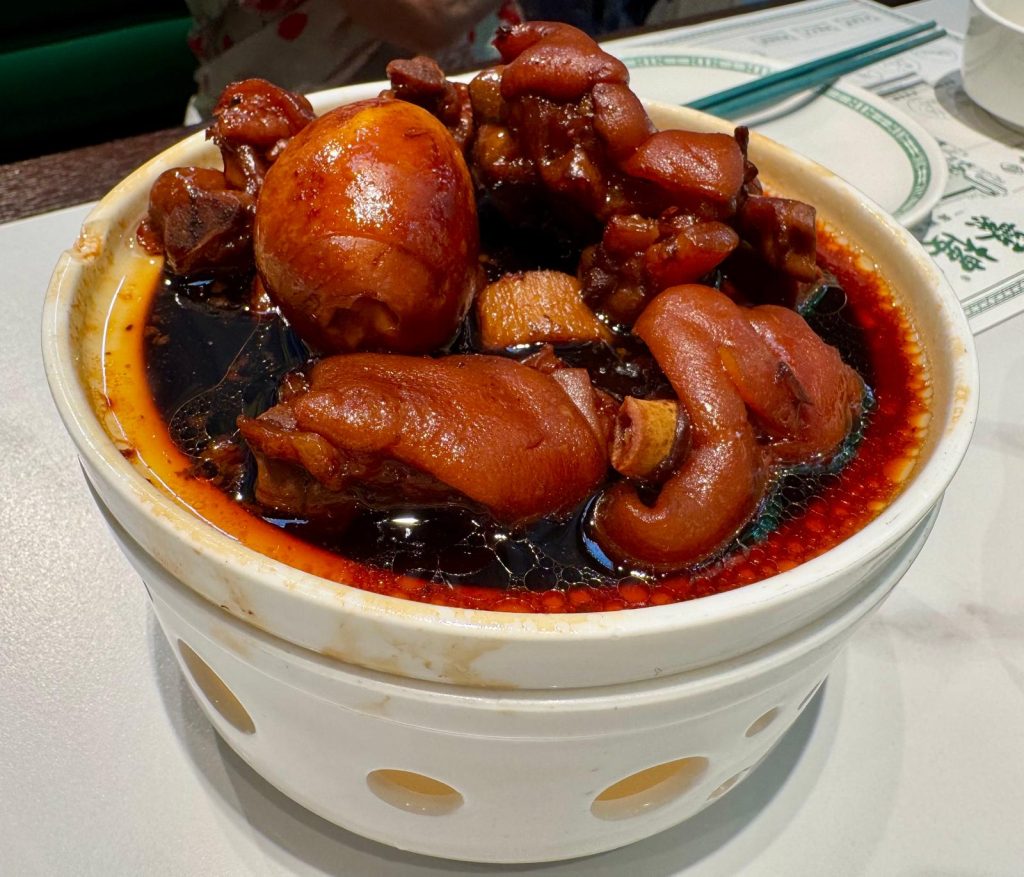
The trotter is slow-braised in black vinegar, ginger, and a touch of sugar until the collagen softens completely and the sauce turns dark and glossy. It sounds heavy, but the vinegar cuts through in a way that makes it far more balanced than you’d expect. It pairs perfectly with steamed white rice. Of everything I ate in Guangzhou, this is the dish I kept thinking about on the flight home.
Fan Lou is where I had the best version of the trip. It’s a classic Guangdong comfort dish that’s difficult to find done well outside Cantonese regions. A portion runs around $7–10 USD.
Crab Noodles
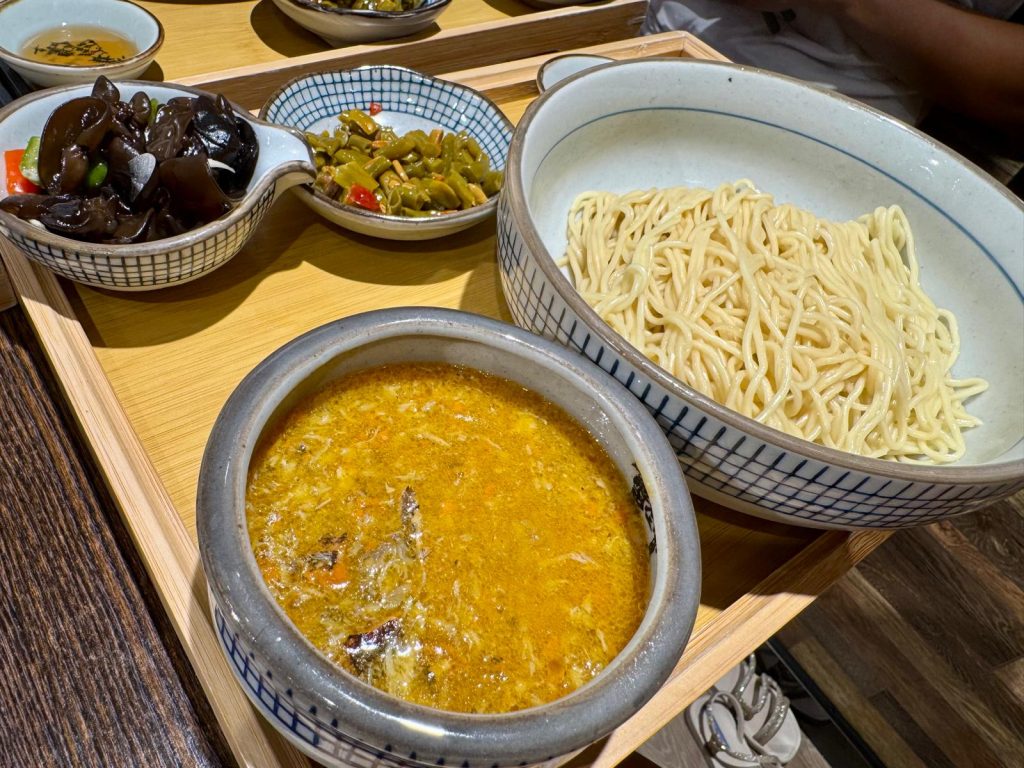
Fresh crab, already deshelled, stirred through thin egg noodles with a light sauce built from the crab’s own juices. The deshelling matters more than it sounds: you get all the flavour without the fuss. It’s served as a single portion, so order one each.
Not every seafood restaurant will have a live tank at the front, so if fresh crab quality matters to you, check before you order. Expect to pay around $11–25 USD per portion at a good seafood restaurant, depending on crab size.
Fresh Cheung Fun
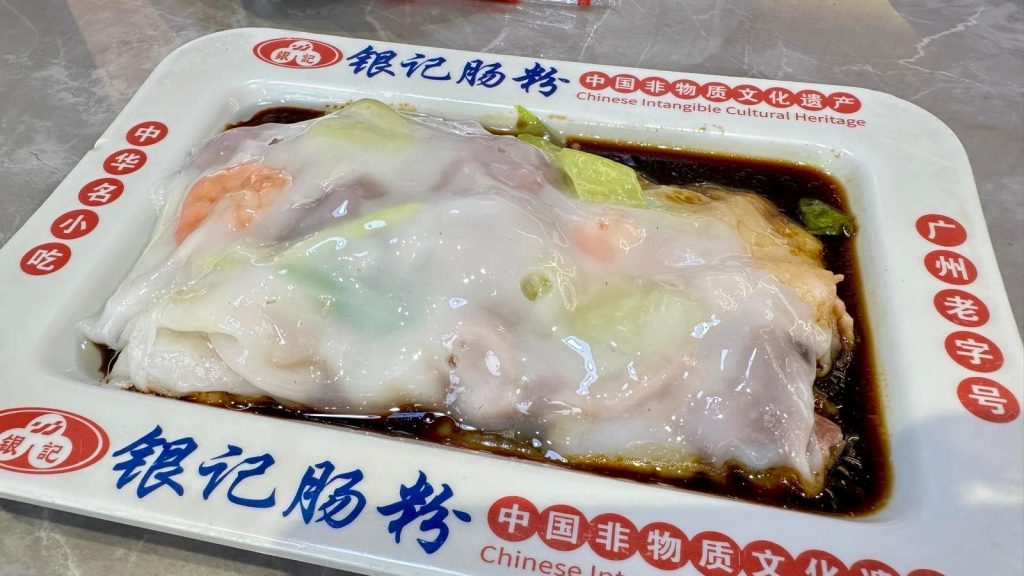
Fresh cheung fun is one of Guangzhou’s defining breakfast dishes, and it’s nothing like the pre-made versions you’ll find elsewhere. Rice batter is steamed to order into paper-thin, silky sheets before being wrapped around fillings such as fresh prawns, char siu, minced beef, egg, or vegetables. The rolls are finished with a light, slightly sweet soy sauce that enhances the delicate flavour without overpowering it. The best cheung fun should be soft enough to melt in your mouth while still holding together around the filling. Expect to pay around US$2–5 per roll at a specialist cheung fun shop or local breakfast restaurant.
How to Eat Well in Guangzhou Without the Stress
Guangzhou’s best food is found at places that have been doing one thing well for decades. Skip the trendy spots and go where locals are eating lunch at 11am.
Payment is easy: Alipay and WeChat Pay are accepted almost everywhere and remain the easiest option. Most larger restaurants also accept international credit cards, but don’t rely on card as your only backup.
If you’re visiting with kids, roast meat shops and dim sum halls are your safest bet for a relaxed meal. For couples, Fan Lou for dinner and a proper yum cha breakfast the next morning is a very good two days in Guangzhou.
Plan your meals before your sightseeing, not after. The food here is the point.
Ready to explore Guangzhou’s food scene? Eat your way through Guangzhou with our recommended tours and experiences.