
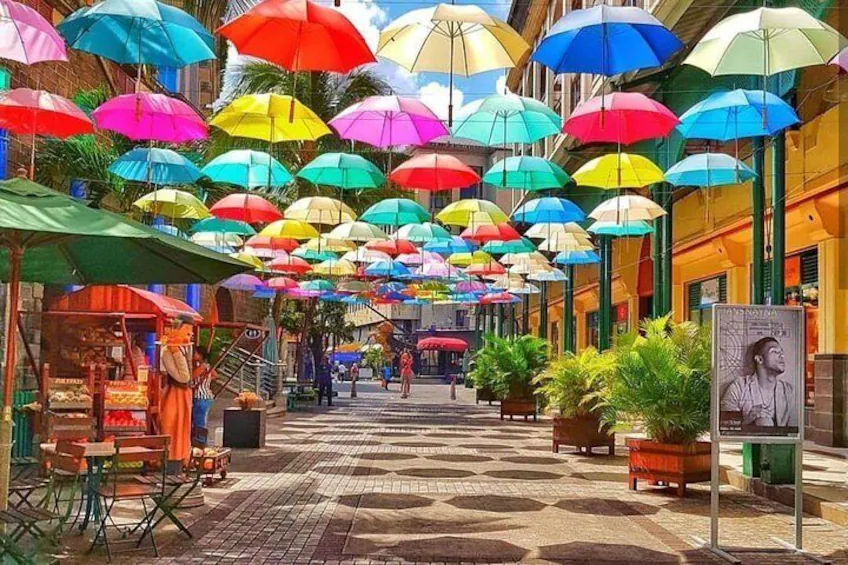
Mauritius doesn’t feel like anywhere else in the Indian Ocean. It’s not just the beaches, it’s the fact that on a single afternoon you can eat Tamil street food, hear French and Creole and English in the same conversation, pass a mosque next to a Hindu temple, and end the day watching families of every background share a table at a local market. That cultural mix is the best thing about Mauritius. It’s also the thing most visitors never properly prepare for, and that’s a shame, because a little context makes the whole trip click into place.
Here’s what you actually need to know before you go.
What Is Mauritius Culture Like?
Mauritius is one of the most genuinely multicultural countries in the world. The population is roughly 52% Hindu (descendants of Indian indentured workers), 17% Christian (mainly Creole), 17% Muslim, and around 3% Buddhist, with smaller communities of Chinese and European heritage. Everyone lives alongside everyone else, not always without friction, but with a day-to-day ease that surprises most first-time visitors. Expect colour, ceremony, incredible food, and a pace of life that resists being rushed.
Language: Which One Do You Actually Use?
Three languages are in common use: English, French, and Mauritian Creole. English is the official language of government and business. French is the language of the media, restaurants, and everyday conversation among locals. Creole is what people speak at home and with each other.
In practice: most people in tourism speak excellent English. Menus, road signs, and hotel communications are in English or bilingual. Outside resorts and tourist areas, French gets you much further. Learning a handful of French phrases like bonjour, merci, s’il vous plaît, l’addition s’il vous plaît (the bill, please) will open doors noticeably. Locals genuinely appreciate the effort.
With kids, this is a non-issue at any reputable hotel or family attraction. In local markets or village areas, a smile and a bit of patience goes further than any phrase book.
Religion and Etiquette: What to Know Before You Visit
With so many active religious sites such as Hindu temples, mosques, Catholic churches, Buddhist pagodas, there’s real etiquette to get right, especially if you’re travelling with children.
Hindu temples: Remove shoes before entering. Dress modestly: shoulders and knees covered for both adults and children. Don’t touch statues or offerings. Photography is usually permitted outside; ask before shooting inside. During festivals like Thaipusam Cavadee or Maha Shivaratree, some temples are not open to visitors.
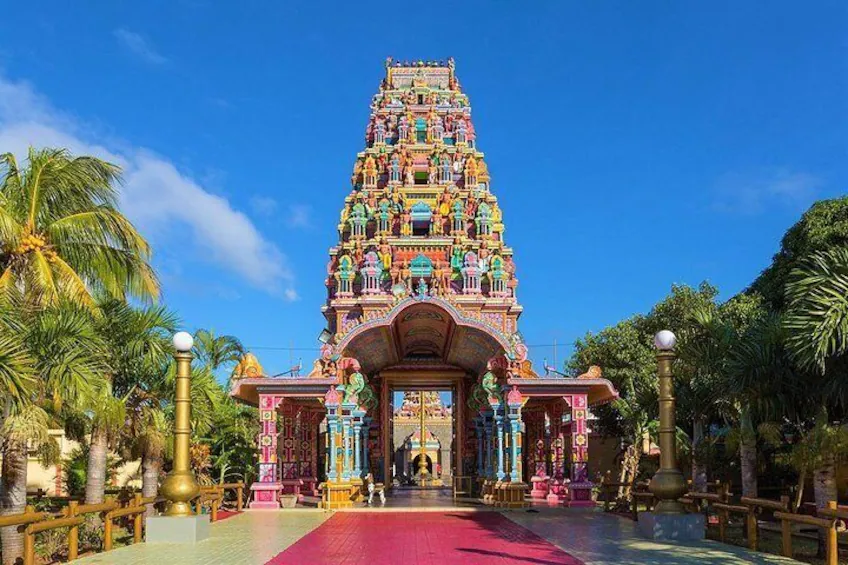
Mosques: Women should cover their hair, and everyone should cover shoulders and legs. Remove shoes. Visit outside prayer times if you’re unsure, which are typically five times daily, with Friday midday prayer the most significant. Non-Muslims are welcome at most mosques outside prayer times, but always check first.
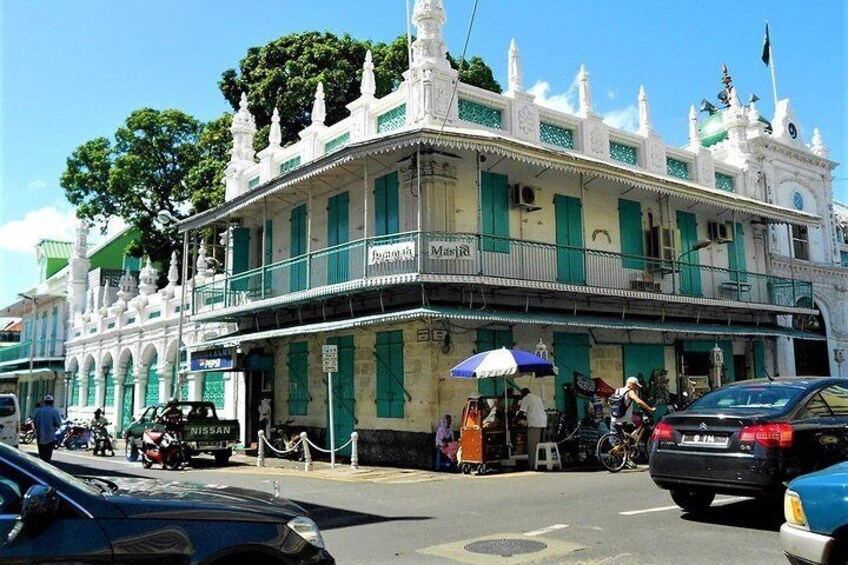
Churches: Standard church etiquette applies. Dress modestly. Quiet children are welcome; most Mauritian churches are family-oriented.
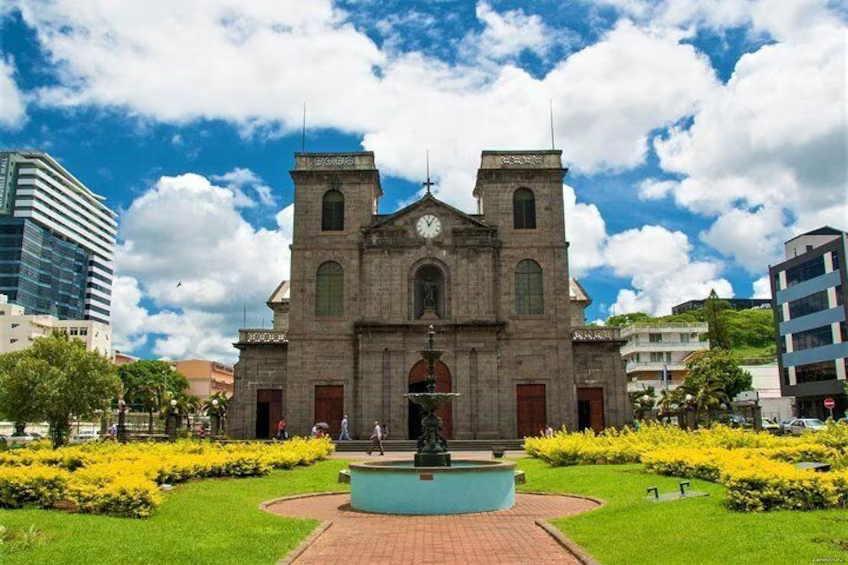
Buddhist pagodas: Remove shoes and hats before entering. You can look for the designated shoe area at the entrance, you won’t miss it. Dress modestly: shoulders and knees covered. Speak quietly; pagodas are active places of worship, not museums. Don’t turn your back to Buddha statues when walking away from them, and avoid pointing at religious images with a single finger. Use an open hand instead if you need to gesture. Photography is generally permitted in outer areas but check before entering inner shrines. If there are incense offerings or candles, leave them alone as these are part of active ritual, not decoration.
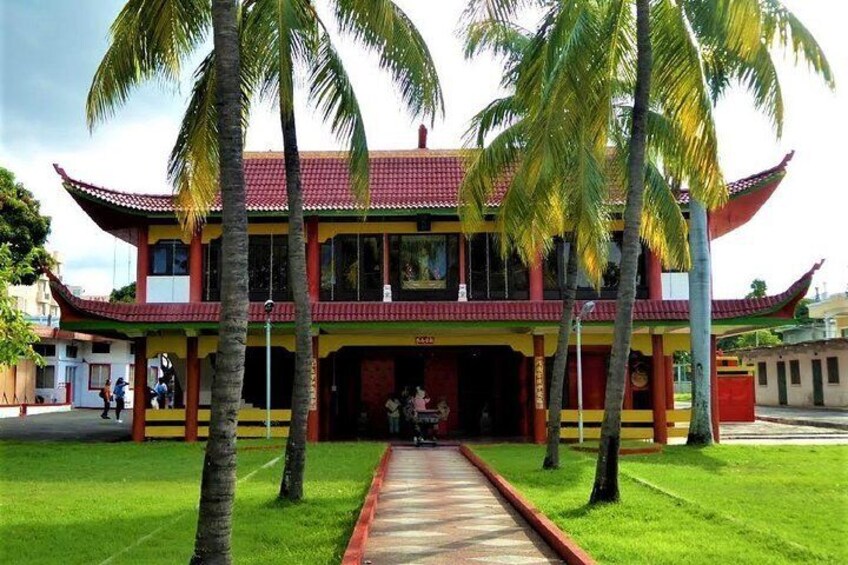
The broader rule across all sites: wherever you are, watch what locals do and follow their lead. Nobody expects tourists to know every custom, but making an obvious effort is always noticed and appreciated.
Dress Code: Beach vs Village
This is where visitors most often get it wrong, and it matters.
At resort beaches and hotel pools, swimwear is completely normal. The moment you step off the beach into a town, village, or market, the rules change. Mauritians dress conservatively in everyday life. Walking through a local market or village in a bikini top and shorts is genuinely uncomfortable for locals, and draws stares, not admiration.
The practical rule: throw on a sarong or a light shirt before you leave the beach. It takes five seconds and the difference in how you’re received is immediate. For families, teach kids the same habit. It models respect and sets a good example that travels well beyond Mauritius.
The one exception: the beach towns of Grand Baie and Flic en Flac have a more relaxed dress standard given the tourist volume, but even there, covering up once you’re inland is the right call.
Food Culture: What to Expect at the Table
Mauritian food is one of the great underrated cuisines of the Indian Ocean, and understanding where it comes from makes eating here far more interesting.
The food is a direct product of the island’s history: Indian curries cooked with local spices, Chinese noodle dishes adapted over generations, Creole fish stews, and French-influenced pastries sold at roadside stalls. Two dishes deserve a mention before you go.
Dholl puri is the closest thing to a national dish. It is a flatbread stuffed with ground split peas, sold at every market from stalls for around 15–20 Mauritian rupees (under $0.50). Order one on day one. Gateau piment is the other essential: small, deep-fried chilli cakes made from crushed split peas and fresh chillies, eaten hot from the fryer. They’re sold at street stalls and markets everywhere, usually alongside dholl puri, and cost next to nothing. Despite the name, they’re not always fiery. Most versions are more savoury than hot, and kids tend to love them. If you want the real heat, ask for extra chilli on the side.
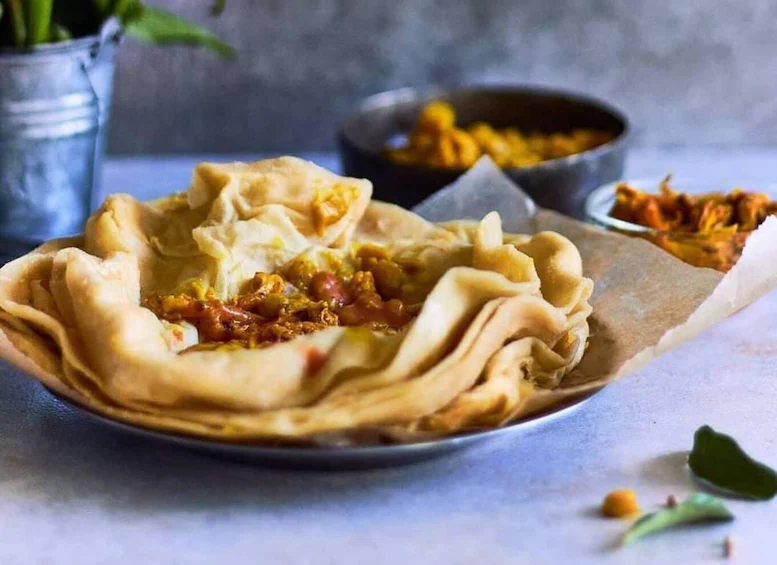
For families: Mauritian food is generally well-suited to kids. Portions are generous, dishes are often mild unless you ask for heat, and vendors at markets are used to international families. At local restaurants, don’t expect a children’s menu but rice, noodles, and mild curries are always on offer.
For couples: the food scene has a genuinely good fine dining layer, particularly in Grand Baie and along the west coast. French-Creole fusion restaurants are worth booking in advance, especially on weekends.
Tipping: not expected in the same way as the US, but appreciated. Around 10% at restaurants is generous and well-received. At local food stalls, rounding up is the norm.
Book a food and city tour in Port-Louis, the capital of Mauritius. You won’t regret it!
Festivals and Public Life: Timing Your Visit Around Culture
Mauritius celebrates a remarkable number of public holidays: 15 in total, drawn from every religious tradition on the island. This is either a delight or an inconvenience depending on your timing.
Diwali (October/November): The Hindu festival of lights transforms villages across the island. Streets are lit with oil lamps, sweets are shared between neighbours of every faith, and the atmosphere is genuinely warm. If you’re visiting in October or November, try to time at least one evening around a local celebration rather than staying in the resort.
Eid ul-Fitr (variable, lunar calendar): Celebrated by the Muslim community with prayers, feasting, and community gatherings. Some local shops close; the mood across the island is festive.
Chinese New Year (January/February): The Sino-Mauritian community celebrates with lion dances and firecrackers in Port Louis’ Chinatown. Worth a visit if you’re there in late January or early February. Kids love it.
Thaipusam Cavadee (January/February): A significant Hindu festival involving processions of devotees carrying decorated wooden frames, sometimes with physical acts of devotion. Families should prepare children gently in advance. It’s a powerful thing to witness, and the cultural context makes it meaningful rather than alarming.
Christmas and New Year (December/January): Christmas is widely celebrated in Mauritius, cutting across communities. You’ll find decorated streets, midnight masses at Catholic churches, and festive menus at restaurants across the island. It’s not a quiet holiday and resorts fill up fast, prices rise noticeably in the last two weeks of December, and Grand Baie in particular buzzes well into the early hours. New Year’s Eve brings fireworks at the major beach hubs; families tend to stake out spots at the beach from late afternoon. Book accommodation at least three to four months ahead if you’re travelling over the Christmas and New Year period. The upside: the island is genuinely joyful at this time of year, and watching Mauritius’s many communities, regardless of faith or background, all come alive at once, each in their own way, is something you don’t easily forget.
During major festivals, expect some roads to be busier, some local businesses to close, and some areas to be crowded. Plan transport in advance and embrace the disruption; it’s the most authentic version of Mauritius you’ll see.
The People: What to Expect From Mauritians Themselves
No culture guide does justice to Mauritius without talking about the people directly, because they’re a big part of why visitors come back.
Mauritians smile easily. It’s not a customer service reflex but rather a genuine social instinct. Strike up a conversation at a market stall and you’ll likely end up learning about someone’s family, their favourite beach, their opinion on the best place to eat dholl puri. There’s a warmth to everyday interactions that feels unhurried, and it tends to catch visitors off guard in the best way.
Part of this comes from the island’s multicultural reality. Mauritians grow up navigating different languages, religious calendars, and family traditions side by side. It produces a social ease with strangers that not every culture has. Curiosity about where you’re from is genuine, not just polite.
For families: this warmth extends particularly to children. Locals will engage with your kids directly, often with sweets at a market stall or a bit of gentle teasing that kids take to immediately. It makes family travel here feel genuinely relaxed rather than like you’re constantly managing logistics around people.
For couples: the positivity of the culture sets a tone for the trip. Mauritius doesn’t feel rushed or transactional. People are happy to slow down and chat, to point you towards somewhere better than where you were heading, to take an extra minute to explain something you didn’t understand on the menu. That kind of unhurried generosity is increasingly rare and worth appreciating when you find it.
Bargaining is not a strong part of the culture and prices at markets are usually fixed or only slightly flexible. Don’t haggle aggressively. Do make conversation. Ask where something is from, what’s good today, how long they’ve had their stall. That curiosity is what Mauritians respond to.
For couples: affection in public is generally fine in tourist areas, but keep it tasteful in villages and near religious sites.
The Short Version
Mauritius is a genuinely easy place to travel: culturally diverse, English-friendly, and warm towards visitors. The only mistakes worth avoiding are the obvious ones: dress appropriately off the beach, take shoes off at temples, pagodas, and mosques, learn merci and bonjour, eat a gateau piment before you leave, and treat the cultural mix as the feature it is rather than background noise. Do that and you’ll come home wondering why more people don’t talk about this island the way it deserves.