
Mauritius looks compact on a map. It isn’t. The island is bigger than it appears, traffic in Grand Baie and around Port Louis can back up significantly on weekday mornings and evenings (roughly 7–9am and 4–6pm), and choosing the wrong coast means spending half your holiday in a car with restless kids. Get the area right first, and everything else falls into place.
What Is the Best Area to Stay in Mauritius for Families?
The north coast, particularly the stretch around Grand Baie and Trou aux Biches are the best area to stay in Mauritius for families with young kids. The beaches are calm and shallow, the infrastructure is well-developed, the roads are easier to navigate, and the widest range of family-friendly hotels and resorts is concentrated here. Families with older kids who are happy spending more time at a resort should consider the east coast around Belle Mare instead.
The North Coast: Best for Families with Young Kids (Grand Baie, Trou aux Biches, Mont Choisy)
This is where the majority of international families end up, and for good reason. The lagoon along the north coast is genuinely calm, sheltered, clear, and shallow enough that little ones can wade in without being knocked over by waves. Grand Baie itself is a lively hub with supermarkets, pharmacies, restaurants and the kind of convenience that parents genuinely appreciate when travelling with young children.
Trou aux Biches and Mont Choisy, a few kilometres south-west of Grand Baie, are quieter versions of the same coastline. The beach at Trou aux Biches is consistently ranked among Mauritius’s best: wide, white and lined with casuarina trees that provide real shade. The water here is so flat on most days that the smallest members of your family can safely splash around in it.
Families with older kids do well here too. The north has a good range of water sports, glass-bottom boat trips and snorkelling excursions launching directly from the beach.
Who this suits: Families with young kids, first-timers, families who want to leave the resort and actually go somewhere without a major transfer, and parents who value easy access to everyday amenities. Works well for all ages.
Who it doesn’t suit: Families wanting total seclusion. Grand Baie is a tourist town and it feels like one. If noise and crowds bother you, look east.
Hotel options: This coast has the widest range of family-friendly resorts on the island, from the Veranda Pointe aux Biches Hotel to larger all-inclusives like the Canonnier Beachcomber Golf Resort & Spa, LUX* Grand Baie and The Westin Turtle Bay Resort & Spa.
The East Coast: Best for Families with Older Kids (Belle Mare, Trou d’Eau Douce)
If the north is the practical choice, the east is the beautiful one. The east coast runs through Belle Mare and Trou d’Eau Douce, and the beaches here are some of the most spectacular on the island: long, wide, powder-white, and far less crowded than the north. The lagoon is still protected by the reef, so the water is calm and safe for swimming.
The trade-off is isolation. There are small local shops and a supermarket or two in Trou d’Eau Douce for basics, but the selection is limited compared to the north. For a proper supermarket run, you’re looking at a 10–15 minute drive to Centre de Flacq. You’re more dependent on your hotel than you would be on the north coast. That said, the better east coast resorts are genuinely built for families: kids’ clubs that run full-day programmes, dedicated children’s pools, water sports, and enough on-site activity to keep the whole family busy from breakfast to dinner. If your family is happy spending the bulk of the day at a resort, the east delivers a step up in both scenery and space that the north can’t quite match.
One important caveat for east coast stays: the trade winds hit this coast harder than any other, particularly between June and September. At their worst in July and August, winds can reach 30–40 km/h that is strong enough to make beach time genuinely uncomfortable, blow sand everywhere and cancel water sports. During these months, the north and west coasts are the better choices for families. If you have your heart set on the east coast, plan your trip for October through May when conditions are significantly calmer.
From Trou d’Eau Douce, you can take a short boat transfer to Île aux Cerfs, a small island with calm lagoons, water sports and picnic areas that kids genuinely enjoy. It’s about 10 minutes by boat and worth doing at least once.
Who this suits: Families with older kids, families staying 10+ days who want to slow down, and those booking a higher-end resort where the hotel itself becomes the destination. Best visited October to May.
Who it doesn’t suit: Families with young kids who need easy access to everyday amenities, and anyone visiting June–September who wants reliable beach time.
Hotel options: This coast has some of Mauritius’s most prestigious family resorts, including the Four Seasons at Anahita, Long Beach Mauritius, One&Only Le Saint Géran and Shangri-La Le Touessrok Mauritius.
The West Coast: Best for Families Who Want a Local Feel (Flic en Flac, Le Morne)
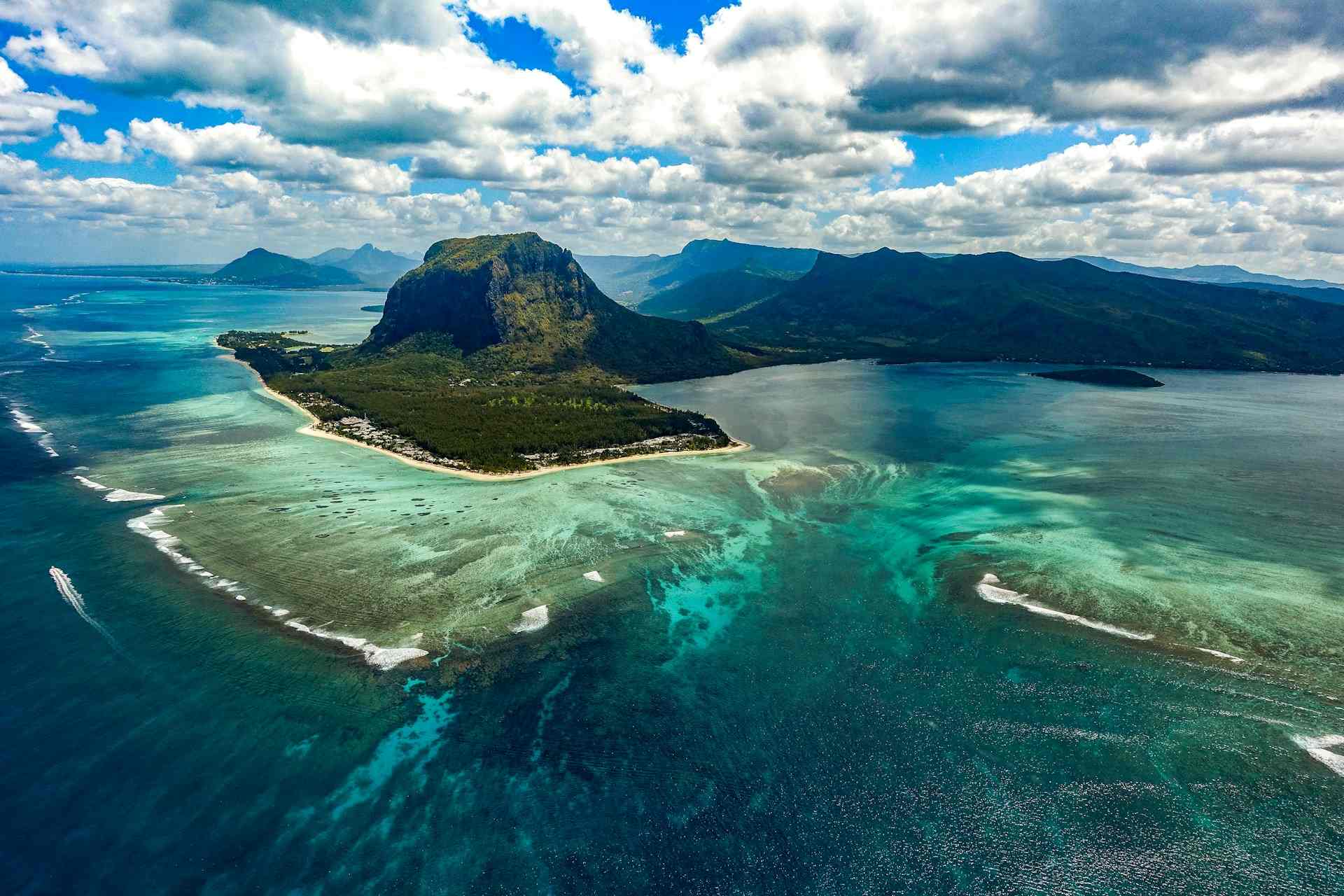
The west coast gets Mauritius’s best sunsets. Flic en Flac has a long stretch of beach and a relaxed local feel, and Le Morne, at the south-western tip, is one of the most photographed spots on the island with a dramatic basalt peninsula rising out of turquoise water, with a UNESCO World Heritage site at its base.
For families, the west is a mixed recommendation depending on where exactly you stay. Flic en Flac sits on the sheltered, leeward side of the island. The water is calm year-round, the beach is wide and swimmable, and it’s a genuinely good choice for families of all ages, particularly those who want to be closer to local life rather than locked inside a resort. There are proper restaurants, a market, and enough going on outside the hotel to keep things interesting.
Le Morne is a different story. It’s beautiful, but it’s one of the windiest points on the island year-round. Le Morne is where Mauritius’s professional kitesurfers compete that tells you everything you need to know about the wind conditions there. For families with young kids, the beach at Le Morne can be challenging: the wind picks up reliably, especially in the afternoons, and conditions aren’t as consistently calm as Flic en Flac or the north coast. The sunsets, however, are spectacular and worth a day trip from wherever you’re based.
Who this suits: Flic en Flac suits families of all ages who want a local feel and reliable calm water. Le Morne suits older kids and adults who appreciate dramatic scenery over ideal beach conditions.
Who it doesn’t suit: Families with young kids who need consistent, predictable calm water should avoid Le Morne as a base.
Hotel options: This coast has some of the most luxurious 5-star hotels with stunning sunsets, from The St. Regis Le Morne Resort Mauritius, LUX* Le Morne, Sugar Beach Mauritius to Hilton Mauritius Resort & Spa.
The South Coast: Worth Visiting, Not Worth Staying
The south of Mauritius is rugged, wild and genuinely beautiful. This is where you’ll find the Chamarel Coloured Earths, the Black River Gorges National Park, and the most dramatic coastal scenery on the island. It’s a day-trip destination, not a base. The south coast is exposed, the waves are strong, and the beaches are not suitable for swimming. There’s very little tourist infrastructure here, and the resorts are few and far between.
Don’t base yourself in the south. Plan a full-day excursion from wherever you’re staying instead. It’s one of the best days you’ll have on the island.
Quick Summary: Which Area Is Right for Your Family?
| Area | Best for | Watch out for |
|---|---|---|
| North (Grand Baie / Trou aux Biches) | Young kids and older kids; best all-rounder | Can feel touristy; peak-hour traffic on weekdays |
| East (Belle Mare / Trou d’Eau Douce) | Older kids, longer stays, higher-end resorts | Strong trade winds June–September; limited shops |
| West (Flic en Flac) | Families of all ages wanting a local feel | Less resort choice than north or east |
| West (Le Morne) | Older kids and adults who love scenery | Very windy year-round; not ideal for young kids |
| South | Day trips only | Not suitable for swimming |
How Far Apart Are the Coasts?
Further than they look. Mauritius is roughly 65km long and 45km wide, but speed limits are low and the roads through the interior are winding. Budget the following driving times from the airport (SSR International Airport, on the east coast):
- East coast resorts: 20–45 minutes
- North coast (Grand Baie): 45–60 minutes
- West coast (Flic en Flac): 45 minutes; Le Morne about 60 minutes
- South coast: 30–45 minutes
One practical note: if your resort is in or near Grand Baie, factor in extra time on weekday mornings and evenings. The main road into town slows considerably between 7–9am and 4–6pm, not a dealbreaker, but worth knowing before you schedule a dinner reservation or an early morning excursion.
Does the Weather Change by Coast?
Yes, more than most guides admit, and it matters for families.
The single most important weather factor in Mauritius is the trade winds, which blow from the south-east year-round but are strongest between May and September. Because the mountains in the centre of the island block the winds from crossing to the other side, the east and south coasts bear the brunt while the north and west stay considerably calmer and more sheltered. For families particularly those with young children, this makes the north and west the safer year-round choices.
The east coast in July and August specifically deserves a warning. Trade winds can hit 30–40 km/h, strong enough to make the beach uncomfortable, cancel water sports, and blow sand into everything. The north and west coasts are a much better bet if you’re visiting during the Mauritian winter.
Le Morne on the west coast is a separate case. Despite being on the leeward side of the island, the tip of the peninsula is genuinely, persistently windy, it’s a world-renowned kitesurfing destination for a reason. Year-round wind is part of what Le Morne is.
Beyond the trade winds, there are two other weather patterns worth knowing:
Anticyclone season (May–September): Anticyclones pass through Mauritius during the winter months and can bring 2–3 days of persistent rain and strong winds, particularly to the east and south coasts. They can also push sea temperatures down by 2–3°C temporarily. These events pass quickly, but factor them in if you’re visiting during this period especially on the east coast.
Cyclone season (November–April): The official cyclone season runs from November to April, with the highest risk between January and March. Cyclones don’t hit every year and the Mauritius Meteorological Services tracks them closely, but it’s worth having travel insurance that covers weather disruption if you’re visiting during these months.
In terms of temperature: July and August are Mauritius’s coolest months, with daytime highs around 22–25°C on the coast. That’s still very pleasant in the sun, but evenings and early mornings can feel noticeably cool, particularly on the east coast where the wind chill adds to it. Pack a light layer for after-dinner walks and early starts.
The shoulder months of October–November and March–April offer the best of both worlds: calmer than winter, drier than the height of summer, and without the wind chill of July–August. For families, these are often the most comfortable times to visit.
Our Verdict: Where to Stay in Mauritius for Families
For a first trip with young kids, book the north coast. It’s the practical choice and it’s still genuinely beautifu. If you’re coming back for a second trip, or your kids are old enough to be fully absorbed by a resort’s activities, the east coast in the right season delivers a step up in both scenery and serenity.
Wherever you stay, get out of the resort for at least two or three days. Mauritius has more to it than a pool view. Explore the food, the markets, the drive across the interior to Chamarel and those moments are what your family will actually remember.
Ready to choose your hotel? See our full guide to the Best Family Hotels in Mauritius (2026) for top picks across the north and east coast.