
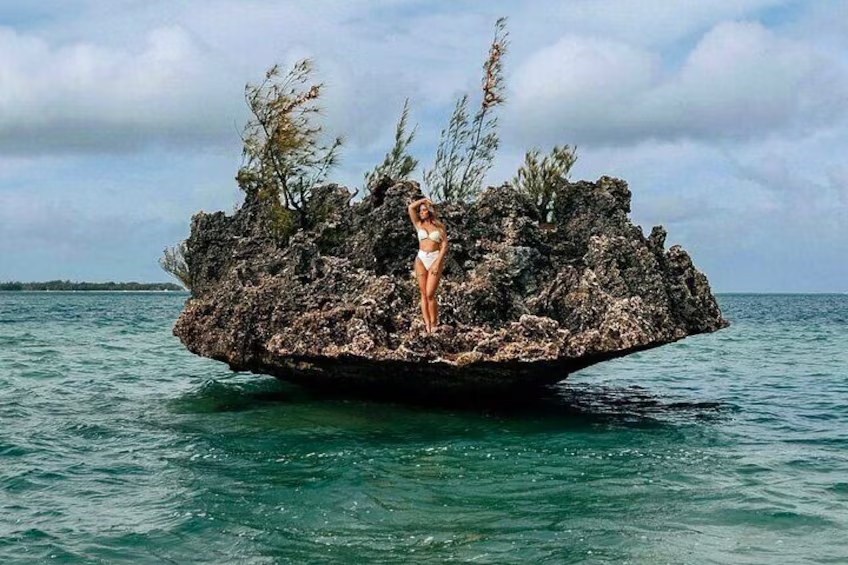
A catamaran trip is, for most visitors, the best day they have in Mauritius. Flat water, open skies, a BBQ lunch on the deck, snorkelling over coral, and an island that genuinely looks like a postcard. Get the right operator on the right coast and it delivers exactly that. Get it wrong, wrong coast for the season, wrong route for your group, and you’ll spend part of the day fighting seasickness while a crew member tries to sell you rum punch.
This guide covers the main departure areas, where each route goes, what you’ll actually see and do, and honestly whether the sea is likely to cooperate.
Is a Catamaran Trip Worth It in Mauritius?
Absolutely! A full-day catamaran excursion is one of the most enjoyable things you can do in Mauritius, and it’s suitable for most travellers including families with children. Catamarans are significantly more stable than speedboats, making them the right choice if anyone in your group is prone to motion sickness. Prices range from around $60–$110 per adult for a full day including snorkelling equipment, BBQ lunch, and open bar. Children under 3 typically travel free; ages 3–12 are usually half price.
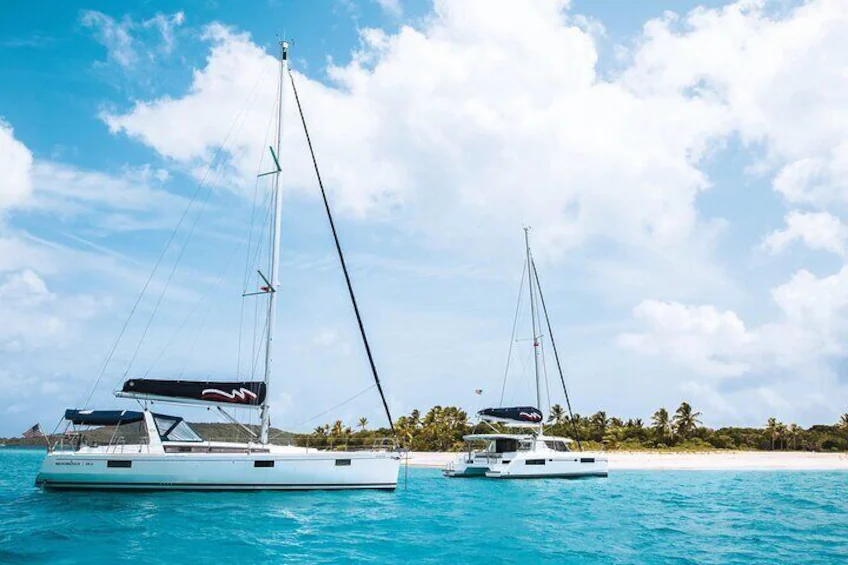
North Coast — The Northern Islands Route (Grand Baie and Cap Malheureux)
The most popular catamaran route on the island departs from Grand Baie or Cap Malheureux on the north coast and heads out to the cluster of small islands offshore: Gabriel Island, Flat Island (Île Plate), and the dramatic volcanic outcrop of Coin de Mire, also known as Gunner’s Quoin.
Islands visited: Gabriel Island is the main stop, a low, sandy island with clear turquoise water and an easy, calm beach. Flat Island is added on some itineraries for a second snorkelling stop, and the rocky silhouette of Coin de Mire is typically a scenic pass-by rather than a landing point. Some operators snorkel in nearby waters around Coin de Mire, conditions permitting.
What you’ll see and do: Snorkelling at Gabriel is accessible for most swimmers. The reef is relatively shallow and the water clear. Expect to see parrotfish, sergeant majors, butterflyfish and, if you’re lucky, sea turtles near the reef edge. The beach at Gabriel has enough shade for non-snorkellers to sit comfortably. A BBQ lunch is served on board or on the beach around midday, typically including grilled fish, rice, salad and unlimited rum punch.
Sea conditions: The north coast is one of the most sheltered departure points on the island. The crossing to Gabriel is roughly 45–60 minutes by catamaran and, in most conditions, comfortable. Between June and September the southeast trade winds pick up across Mauritius; the north coast bears less of the brunt than the east, but you may still feel a light chop on the crossing. October through May is the calmest window.
Who it suits: Families with children of all ages, including younger kids, as Gabriel’s beach is calm and safe. The catamaran is stable enough that most people with mild sensitivity to motion are fine. Older kids who can snorkel (typically 6 and up) will enjoy it most. Non-swimmers can still participate fully and watch from the catamaran or beach.
East Coast — Île aux Cerfs Route (Trou d’Eau Douce)
The east coast catamaran route departs from Trou d’Eau Douce and heads to Île aux Cerfs, Mauritius’s most visited island. Île aux Cerfs sits inside a broad, protected lagoon and it’s a short crossing of around 10 minutes. Most full-day trips include a stop at the GRSE waterfall (Grande Rivière Sud-Est) and a snorkelling break inside the lagoon, typically reached by small boat from the catamaran.
Islands visited: Île aux Cerfs is the centrepiece; a small island with several beaches, palm trees, water sports on offer and a good stretch of shallow lagoon on the western side. The island can get busy by midday, especially in peak season.
What you’ll see and do: The lagoon at Île aux Cerfs is exceptionally calm and shallow on the western side, safe for toddlers wading and comfortable for non-swimmers. Kayaking, parasailing and glass-bottom boat rides are available to book on the island. Snorkelling on the east coast is moderate: the reef here isn’t as pristine as the north coast, but you’ll still see reef fish and, if conditions are right, sea turtles around the lagoon edge. The BBQ format is the same. Lunch is served mid-trip, typically fresh fish and salad on board or on the beach.
Sea conditions: The east coast lagoon is well-protected by the outer reef, so the crossing to Île aux Cerfs is generally very calm, especially in the mornings. The wider ocean beyond the reef can be rough in the trade wind season (June–September), but catamaran routes here stay inside or close to the lagoon, so sea conditions are generally not an issue. This is one of the most consistently calm and sheltered experiences on the island.
Who it suits: The best route for families with very young children and toddlers, because the lagoon is so calm and shallow. Strong swimmers and keen snorkellers may find it less exciting than the northern islands route since the reef is accessible but less dramatic. For a relaxed beach day on the water with kids of any age, this is the safest and most comfortable option.
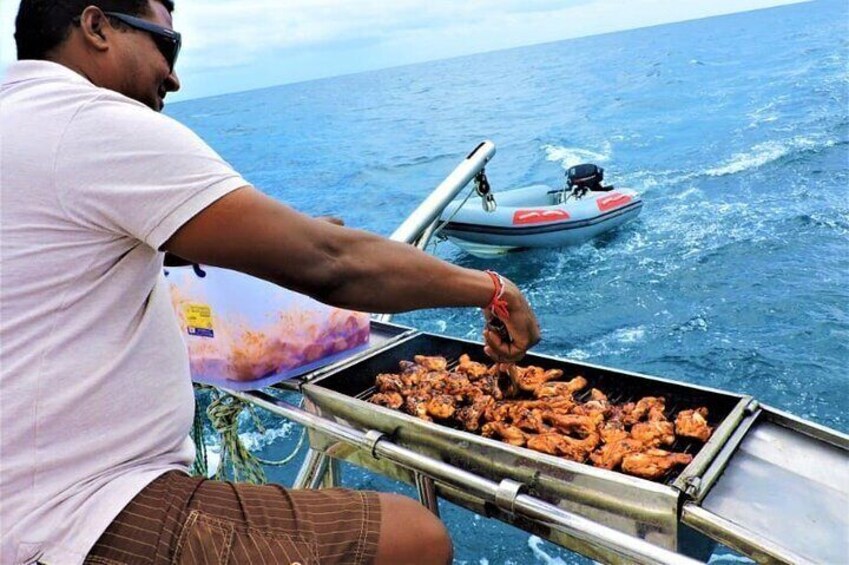
West Coast — Île Bénitiers and Dolphin Tour (Tamarin and La Preneuse)
The west coast catamaran route is a different experience from the north and east. Departures run from Tamarin or La Preneuse, and the day follows the southwest coastline with two main attractions: an early morning encounter with wild spinner and bottlenose dolphins in the waters off Le Morne, and an afternoon stop at Île Bénitiers, a small sandbank island in the lagoon.
Islands visited: Île Bénitiers is a low-lying sandbar island in the lagoon opposite Le Morne Brabant. It’s beautiful rather than spectacular: white sand, clear water, a few trees, and works well as a lunch stop and snorkelling base. The real draw of this route is the dolphin encounter and the dramatic backdrop of Le Morne peninsula.
What you’ll see and do: Tours depart early, usually by 7am, to find the dolphins before they move offshore. Spinner and bottlenose dolphins rest and socialise in these waters in the early morning, and snorkelling alongside them (at a respectful distance) is genuinely memorable. Ethical operators follow distance guidelines and don’t chase the animals; reputable companies make this clear in advance. At peak times, multiple boats may be present, so the experience can feel busy. After the dolphin encounter, tours head to Île Bénitiers for snorkelling, swimming and a BBQ lunch. Visibility in the west coast waters is good, and reef snorkelling here can be good on the right day, with generally clear visibility, and the added bonus of spotting the Le Morne Brabant rock close up from the water.
Sea conditions: The southwest coast faces more open water than the north and east, and the crossing between La Preneuse and Île Bénitiers can be rougher in windy conditions. Le Morne is one of the windiest points on the island year-round; it’s a professional kitesurfing destination for a reason. From October to May, conditions are considerably calmer. June to September can bring choppier seas and stronger winds, particularly in the afternoons. Morning departures are always more sheltered. This is the west coast route’s one genuine limitation for families: on a rough day, the crossing to Île Bénitiers isn’t comfortable for young children or those prone to motion sickness.
Who it suits: Couples and families with older children or teenagers who would genuinely value the dolphin encounter. The early start is worth it for the dolphins but requires getting everyone up and out early, which is harder with toddlers. Confident swimmers will enjoy the snorkelling. Not ideal for very young children or anyone sensitive to motion on windier days. If you have young kids and want to include a dolphin encounter, try to book during the calmer months.
South and Southwest — Bel Ombre and Le Morne Routes
A smaller number of operators run catamaran excursions from the south and southwest coast, departing from Le Morne or the Bel Ombre area. These routes tend to be quieter and less commercialised than the north and east, and are typically available through resorts in the area rather than via the large Grand Baie operators. Advance booking might be required, so check with your resort ahead of time.
What these routes offer: Coastal snorkelling along the more remote southern reefs, which see significantly fewer boats and divers. Visibility can be exceptional. Some routes incorporate the Le Morne lagoon and passes around the southern headlands. Lunch is typically a smaller, more intimate affair than the full-production BBQ format of the north coast tours.
Sea conditions: The south coast of Mauritius faces open ocean and is genuinely exposed. While catamaran routes stay within or close to the lagoon, conditions can be rougher here than on the north or east coast, especially from May through September. These routes suit confident travellers who are comfortable on the water and are looking for something quieter than the main tourist circuits.
Who it suits: Couples and adults staying in Bel Ombre or Le Morne who want a more exclusive, quieter experience. Families with older children or teens who are strong swimmers. Not recommended for toddlers or young children, or anyone with sensitivity to motion.
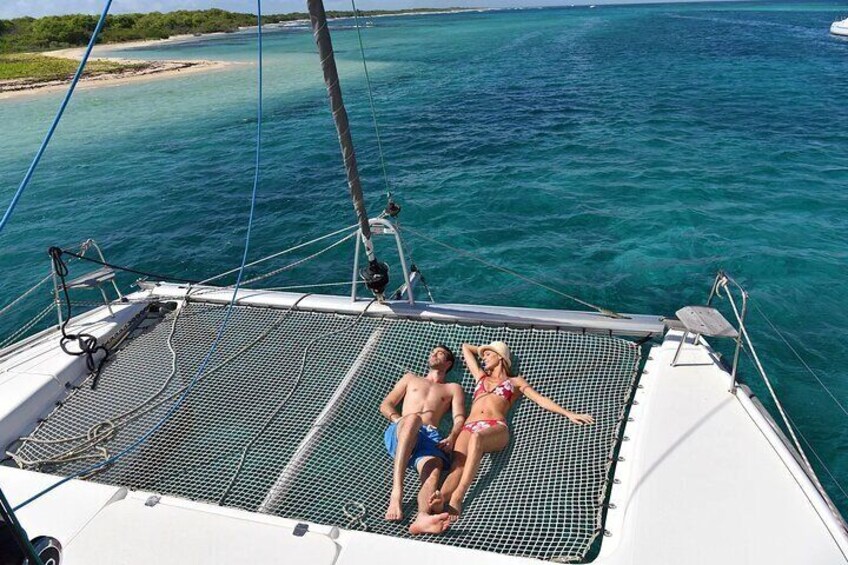
Which Route Is Right for You?
| Route | Best for | Sea conditions | Children suitability |
|---|---|---|---|
| North (Grand Baie) | Couples, families, snorkellers | Calm to moderate, best Oct–May | All ages, including young kids |
| East (Trou d’Eau Douce) | Families, young children, non-swimmers | Very calm, sheltered lagoon year-round | All ages, including toddlers |
| West (Tamarin) | Couples, older kids, dolphin seekers | Moderate to rough, best Oct–May, mornings calmer | Ages 6+ on calm days; older kids/teens best |
| South/SW (Bel Ombre) | Adults, couples, experienced swimmers | Exposed, suitable for confident travellers | Older children and teens only |
Practical Notes Before You Book
Catamaran vs speedboat: Catamarans are always the better choice for families and anyone with motion sickness. Speedboats are faster and more thrilling, but the ride is considerably bumpier, especially in trade wind season. Even on a catamaran, longer crossings or windy days can still feel choppy. If you have young children or anyone who struggles on the water, book a catamaran.
What’s typically included: Most full-day catamaran tours include snorkelling equipment, a BBQ or buffet lunch, open bar (rum punch, beer, soft drinks), and some later-return trips may include drinks on the way back. Confirm before booking as some budget operators charge extra for equipment.
Prices: Full-day tours run $60–$90 per adult from the north and east coasts. West coast tours with dolphin encounters typically cost $80–$110. Children under 12 are usually 40–50% of the adult rate; under 3 often free. Private charters (the whole boat for your group) start around $400–$600 for a half-day and are worth considering for families wanting flexibility.
Booking through your hotel vs. independently: Most hotels in Mauritius organise catamaran excursions directly and often use the same reputable operators as third-party booking sites. The convenience is real, and transport to the departure jetty is included. Booking independently through the operator’s own site is sometimes cheaper and allows more choice on timing and route. Either works.
Sun protection: A full day on the water in Mauritius is genuinely intense. High-SPF reef-safe sunscreen, a hat, and UV-protective rash guards for children are worth packing. Most operators provide shade on deck, but at anchor for snorkelling you’re fully exposed.
A catamaran day is, for many families and couples visiting Mauritius, the one thing they wish they’d booked earlier in the trip. Most people end up doing a second excursion if their itinerary allows. Plan it for the middle of your stay rather than the last day, so you have time to go again if the conditions aren’t perfect the first time around. Book your catamaran experience here.
Planning more of your time on the water? See our full guide to Day Trips and Nearby Escapes from Mauritius for island-hopping ideas, ferry routes and everything else within reach of the main island.