
Most people fly to Mauritius, check into a resort, and barely leave the beach. That’s a perfectly fine holiday. But if you have a week or more, the islands and destinations within reach are genuinely worth exploring, and a few of them remain surprisingly under-visited for what they offer.
Some are a half-day on the water. Others need two or three nights to do properly. Here’s how to tell which is which, and whether any of them are worth your time.
Day Trips from Mauritius
These three are all doable without an overnight stay. Book through your hotel or a local operator the day before; none require much advance planning.
Ile aux Cerfs: The Classic (and Still the Best for Families)
How to get there: Speedboat from the east coast jetty at Trou d’Eau Douce. The crossing takes about 10 minutes and ferries run throughout the day. Most hotels will organise the transfer. Expect to pay around $10 to $20 per person for the boat, or book as part of a full-day catamaran excursion that includes lunch and snorkelling for roughly $60 to $90 per adult.
Best for: Families with kids of all ages, couples looking for a straightforward beach day.
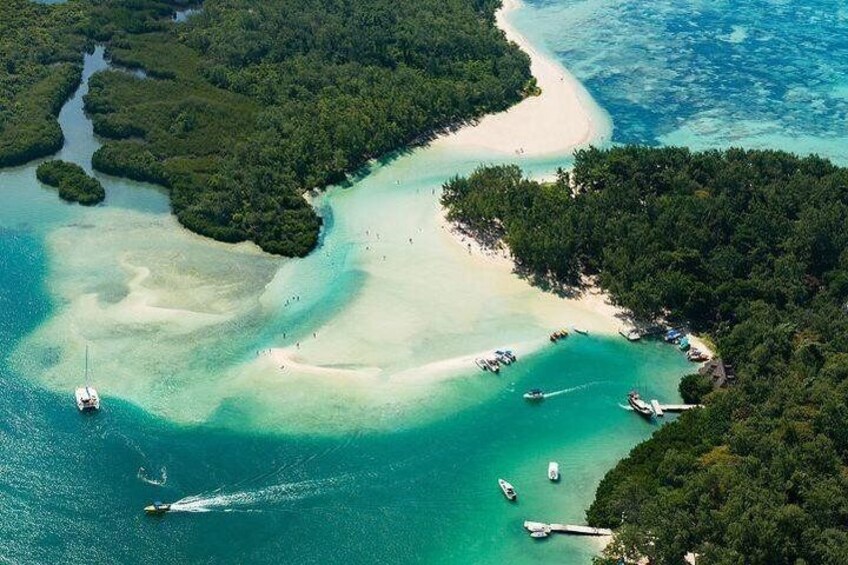
Why go: Ile aux Cerfs is the most-visited island off Mauritius, and it’s popular for good reason. The lagoon on the western side is genuinely calm and shallow, safe for kids who aren’t strong swimmers, and easy enough for toddlers paddling at the edge. You can rent kayaks, try parasailing, or simply find a spot under a palm and stay there all day. BBQ lunch on the beach is the standard format and usually better than expected for a beach-tour lunch.
What to watch out for: The island gets busy, especially on weekends and during peak school holiday season (July to August). Arrive early on a catamaran tour that departs by 9am to get ahead of the crowds. Vendors on the beach can be persistent; a polite but firm “no thank you” handles it. If you’re coming with very young children, choose a catamaran over a speedboat for stability.
Book your Full-Day Catamaran excursion to Île aux Cerfs now!
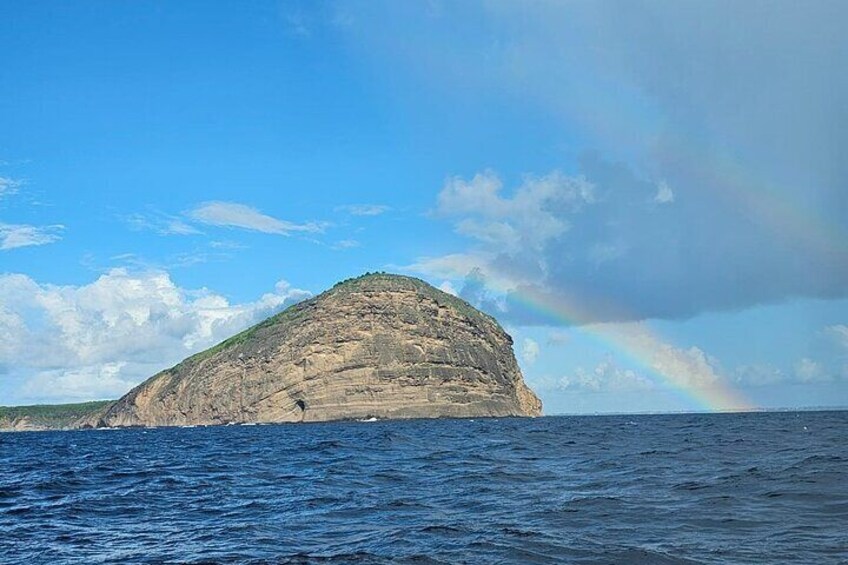
The Northern Islands: Gabriel, Flat Island and Coin de Mire
How to get there: Catamaran or speedboat, primarily from Grand Baie, with some departures from Cap Malheureux for private charters. Full-day catamaran tours typically run $60 to $90 per adult, including BBQ lunch and snorkelling gear. Private speedboat charters start around $350 to $500 for the whole boat for a half-day.
Best for: Snorkellers, couples, families with children old enough to snorkel (generally 6+). Not ideal for toddlers on speedboat options; stick to catamaran if you’re bringing young kids.
Why go: These three northern islets are quieter and wilder than Ile aux Cerfs, a noticeable step up in water clarity and atmosphere from the busier east coast islands. Gabriel Island has some of the clearest water off Mauritius, with generally calm beaches, especially in good weather. Flat Island has a working lighthouse and good snorkelling along its reef. Coin de Mire, also known as Gunner’s Quoin, is a dramatic volcanic rock that juts out of the ocean and hosts some of the best reef diving in the north. Most boat trips circle it rather than stop, as currents can be strong. Seabirds nest here too; you’ll spot tropicbirds if you look up.
What to watch out for: The speedboat option is thrilling but bumpy, genuinely uncomfortable if seas are choppy, and rough for anyone prone to motion sickness. Catamarans are far more stable and the better call for families. Book through a reputable operator and confirm what’s included: some tour prices look low but charge extra for snorkelling equipment.
Ile Benitiers and the Underwater Waterfall: The West Coast Day Trip (with Half-Day Dolphin Options)
How to get there: Most operators depart from the west coast, typically near Tamarin or La Preneuse. Full-day catamaran excursions run around $80 to $110 per adult and usually include swimming with dolphins (seasonal, not guaranteed), a BBQ lunch, and a stop at the island. Some operators offer shorter half-day dolphin speedboat trips at a lower price point if you want a quicker option.
Best for: Couples, families with children 5 and up. The dolphin element makes it particularly memorable for older kids.
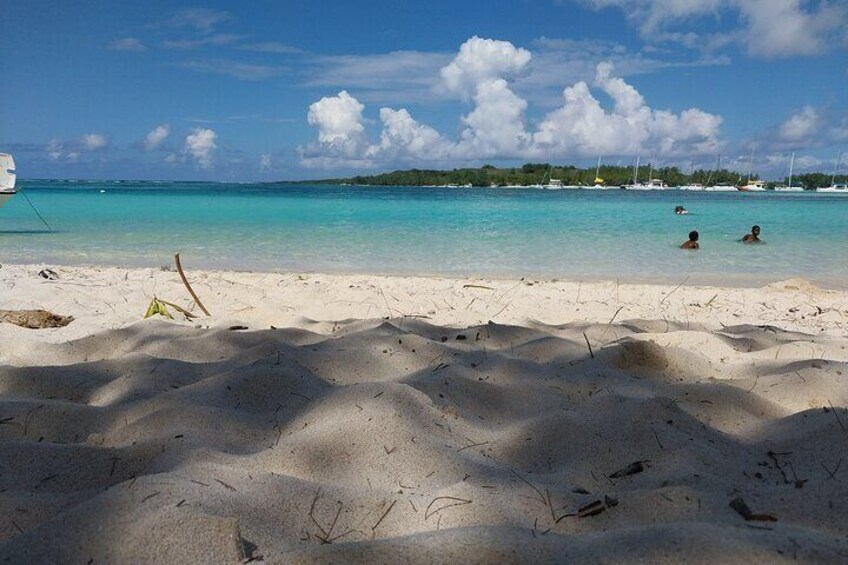
Why go: Ile Benitiers sits in the lagoon off the southwest coast, opposite Le Morne. It’s deliberately simple, but the surrounding area has two things you won’t find elsewhere. First, the dolphins: spinner and bottlenose dolphins are often seen in these waters in the early morning, and catamaran tours depart early to find them. Seeing them in the wild, rather than in a pool, is what makes this experience worthwhile. Second, the “underwater waterfall” near Le Morne peninsula, a well-known aerial optical illusion caused by sand and current patterns that makes it look like water is flowing off the edge of the island shelf. If you’re doing a helicopter flight over Mauritius, this is the view that justifies the flight.
What to watch out for: Dolphin encounters are real wildlife, not performances. You won’t always see them, and ethical operators don’t chase or crowd the animals. Book with an operator who respects distance guidelines. The “underwater waterfall” is visible best from a helicopter or light aircraft, not from the boat.
Short Breaks from Mauritius (2 to 4 Nights)
Both of these need more than a day to be worth the trip. Budget accordingly, and book flights early; seats on these routes fill up faster than you’d expect.
Reunion Island: For Families and Couples Who Want Something Completely Different
How to get there: Fly from Sir Seewoosagur Ramgoolam (SSR) International Airport. Air Mauritius and Air Austral operate the route. The flight takes around 45 minutes in the air, with a total door-to-door time of around 3 hours including airport time. Flights start from around $160 to $200 one-way; book early, as prices spike close to departure. Most flights land at Roland Garros Airport in Saint-Denis in the north. Plan for at least 2 to 3 nights; anything less and you’ll spend most of your time in transit.
Best for: Active families, couples interested in scenery beyond the beach, anyone who’s already done the resort scene and wants something genuinely different.
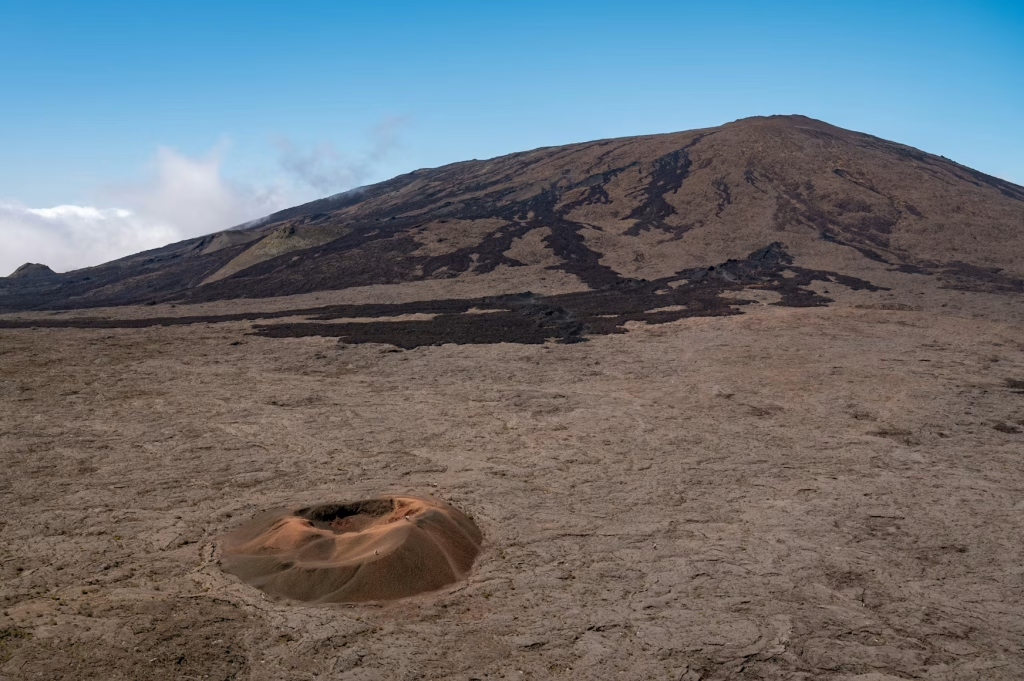
Why go: Reunion is technically a French overseas territory, which means it feels and operates like France, just with a tropical Indian Ocean backdrop. The island’s interior is the real reason to come. Piton de la Fournaise is one of the world’s most active volcanoes and you can hike right to its rim on guided tours. The three calderas (cirques) of Cilaos, Mafate and Salazie are extraordinary: steep valleys surrounded by peaks, accessible by road or on foot. Cilaos in particular has well-marked trails suitable for families with older children. For couples, the combination of excellent French restaurants, dramatic landscape and very few visitors crossing over from the Mauritius resort circuit makes it feel like a genuine discovery.
What to watch out for: Reunion is not a beach holiday. The sea on most of the coast is rough, and shark activity near shore means most swimming beaches are protected lagoons limited to the west coast around Saint-Gilles. If you’re expecting another island beach day, manage that expectation before you go. Rent a car at the airport; public transport is limited and the island is large enough that you’ll want freedom of movement.
Rodrigues: For Travellers Who Want Mauritius as It Was 30 Years Ago
How to get there: Fly with Air Mauritius from SSR. The flight takes about 90 minutes and operates daily, with multiple flights on some days depending on season. Round-trip fares start around $250 to $400. There is a ferry, but the crossing takes around 36 to 48 hours depending on conditions and schedule, and it’s only worth it if you have time and sea legs. Budget for at least 3 to 4 nights; anything less doesn’t do the island justice.
Best for: Couples seeking genuine quiet, older children and teens who like nature and water sports, adventurous families happy without resort infrastructure.
Why go: Rodrigues is technically part of Mauritius but feels like a completely separate country. The island has around 43,000 residents, no luxury hotel chains, and a lagoon that’s one of the largest relative to island size in the Indian Ocean. The diving is excellent and almost crowd-free: high visibility, good fish density, and sites that feel like personal discoveries rather than tourist queues. The windsurfing and kitesurfing in the southeast lagoon around Mourouk is serious, with consistent southeast trade winds making Rodrigues a growing name among intermediate and advanced riders. The food is another reason people end up staying longer than planned. Fresh crayfish and octopus salad at a local restaurant will cost you a fraction of anything comparable in a Mauritius resort.
What to watch out for: Infrastructure on Rodrigues is basic by design. Hotels are mostly small guesthouses and local properties, pleasant, but nothing like the polished resort experience on the main island. Rent a car: the roads are good and the island is small enough to drive around in a day, but taxis are sparse outside Port Mathurin. Cyclone risk runs November to April; the dry season from May to October is the better window.
How to Choose
If you have one day to spare, Ile aux Cerfs is the safest bet for families and the northern islands are the better call for couples and keen snorkellers. The west coast dolphin day works well as a half-day addition to either.
If you have 2 to 3 extra nights and want something that actually feels different, Reunion is the one. If you want somewhere quieter, with proper diving and a slower pace, book Rodrigues instead.
None of these require complicated logistics. The harder choice is leaving the resort. Most people don’t. That’s exactly why you should.