Pereybere Beach, Mauritius: What to Eat, Do and Expect Before You Go
Is Pereybere worth visiting?
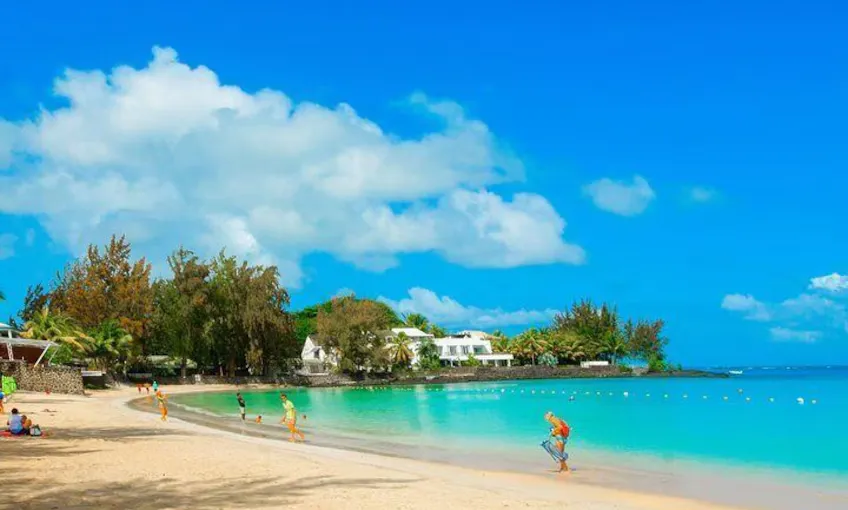
Yes, and it’s one of the most underrated stretches of sand on the island. Pereybere sits on the north coast of Mauritius, about 5 kilometres east of Grand Baie. The beach is wide, clean, and genuinely sandy from end to end. No rocks underfoot, no weed lines, no unpleasant surprises. The lagoon is calm enough for young kids to paddle safely, and the water is clear enough to see your feet even waist-deep. If you’re deciding between the busier Grand Baie strip and something a little more relaxed, Pereybere wins easily.
The beach itself
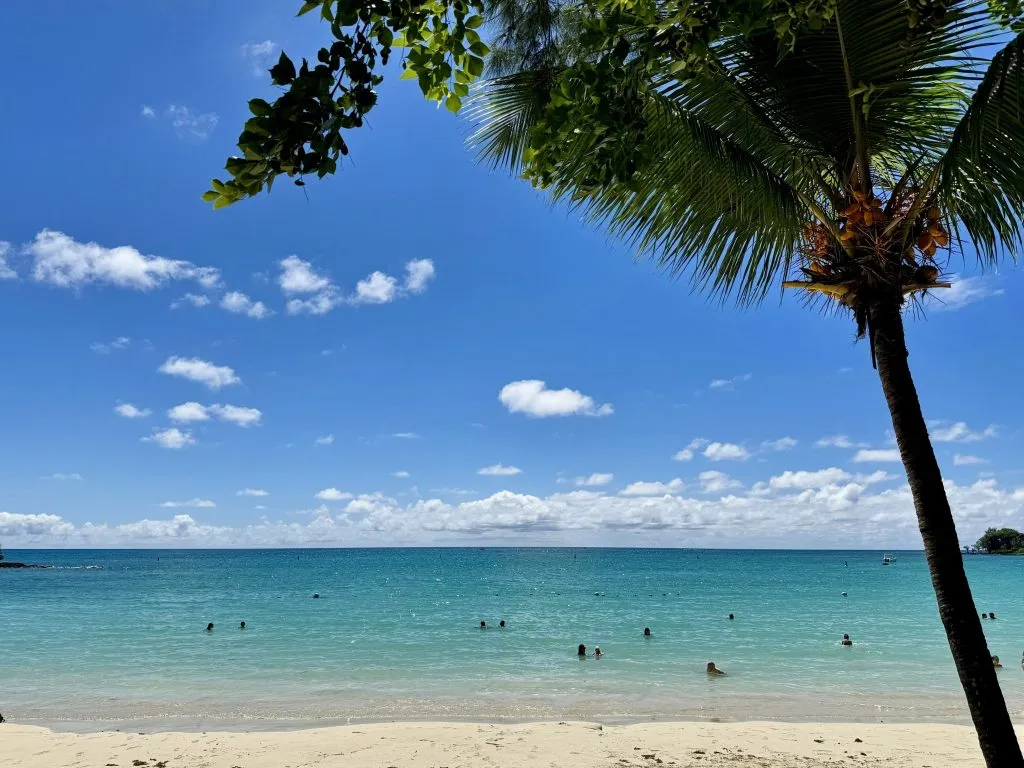
Pereybere is a public beach, which matters. No resort gatekeeping, no sun lounger rental monopoly. You can put down a towel wherever you like. The sand is soft, pale, and goes all the way to the water’s edge with no awkward pebble zone or seagrass to wade through. The waves here are gentle; the reef offshore keeps the swell manageable, so even nervous swimmers feel comfortable. On a typical morning, the water is glassy and almost impossibly blue.
It gets busier in the afternoons, especially on weekends. If you want the beach to yourselves, aim for before 9am. The light is better for photos then anyway.
Food trucks and local eating
This is where Pereybere really earns its reputation. The road running along the beach is lined with small food trucks and family-run stalls, and the food is genuinely good. Mauritius is a cultural melting pot of French, Indian, Creole and Chinese influences, and the beachside food scene reflects exactly that.
What to order
Look for vendors selling dholl puri, thin flatbreads stuffed with split peas and served with rougaille (a spiced tomato sauce) and pickled vegetables. A full portion costs around $1.50 to $2.00 and it is one of the best things you will eat in Mauritius. If the vendor also offers a mine frite (stir-fried noodles), get that too.
For something more substantial, head to La Gourmandise, a food truck that does brisk business for good reason. The grilled chicken comes off the coals with a char that’s hard to argue with, and the kebabs are well-spiced and generously portioned. Expect to pay around $6 to $10 USD for a full plate. It’s the kind of food that tastes even better eaten at a plastic table five metres from the sea.
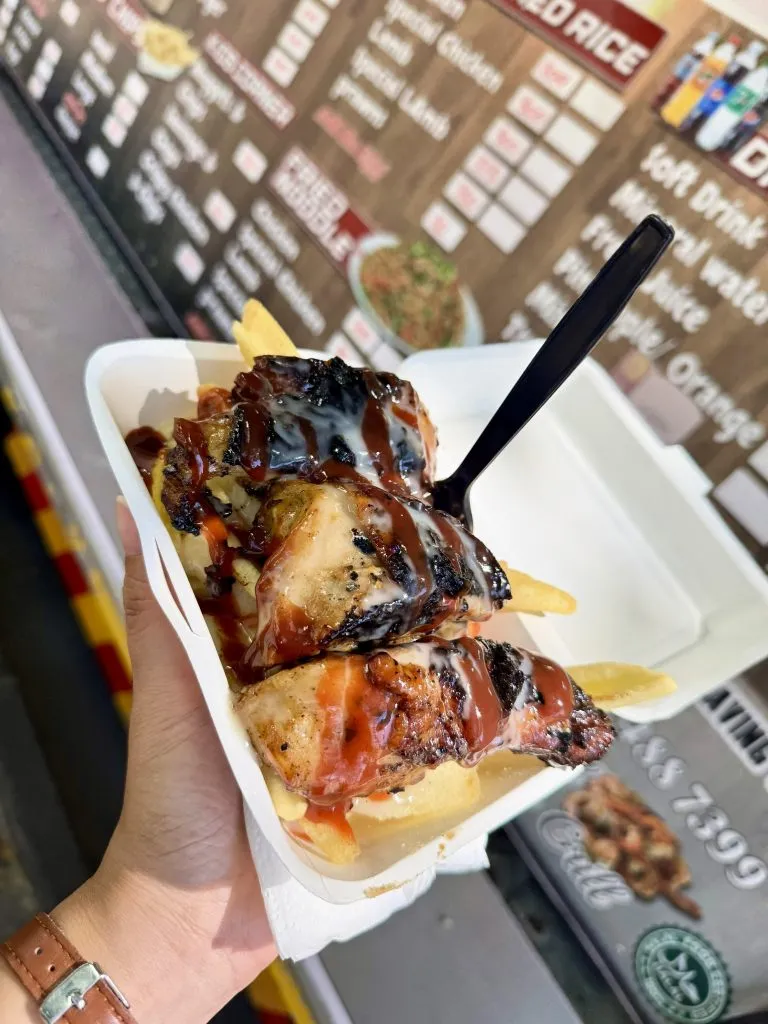
For grilled fish, keep an eye out for vendors with a charcoal setup. Red snapper or capitaine (emperor fish) are common, served with lime and chilli sauce. Most portions run $8 to $12 USD depending on size.
Confit and fresh coconut
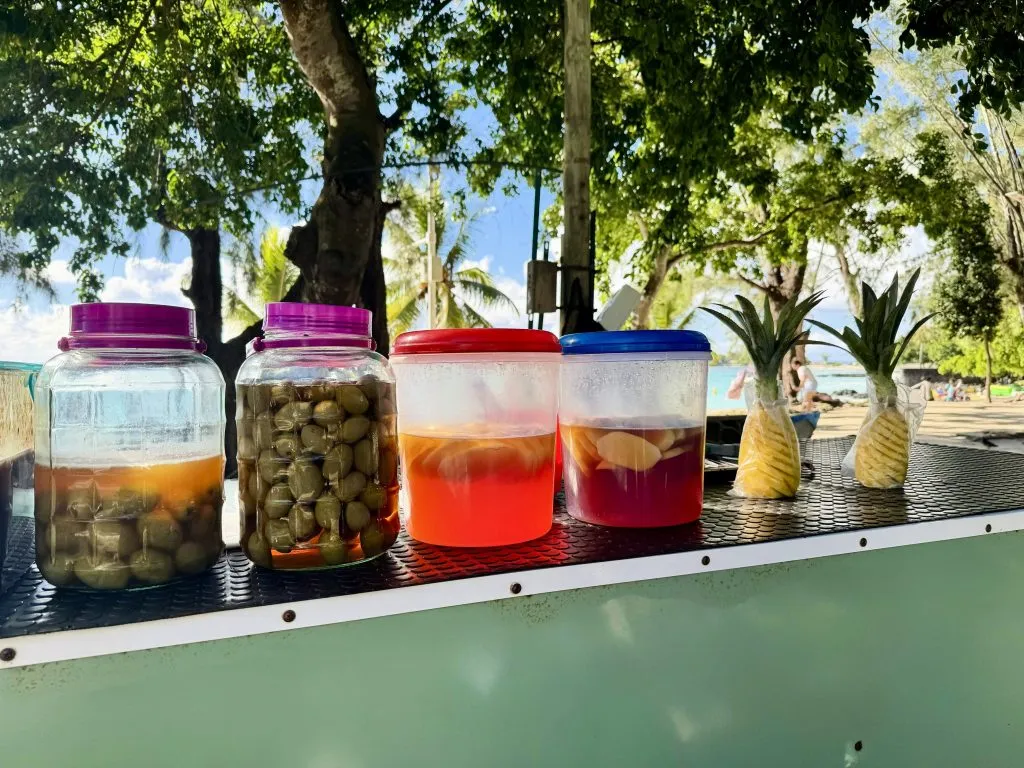
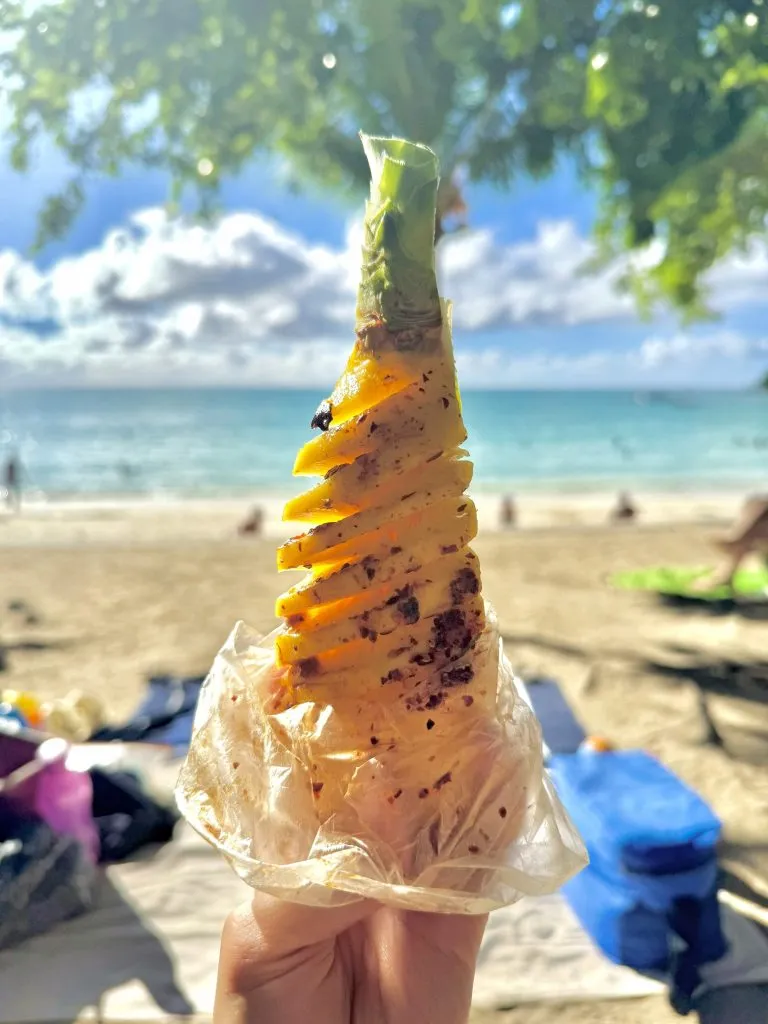
Confit shows up at nearly every stall in small plastic bags. The Mauritian version means fruit preserved and spiced with chilli, salt and lime, and the range is wider than you might expect. Green mango is the classic, but you’ll also find cucumber, pineapple and fruit Cythere (golden apple). Ask the vendor to add a drizzle of tamarind sauce and the whole thing shifts into something else entirely: sweet, tart, spiced and completely addictive. Grab a bag for $1 to $2 and eat it on the beach. It’s very hard to stop.
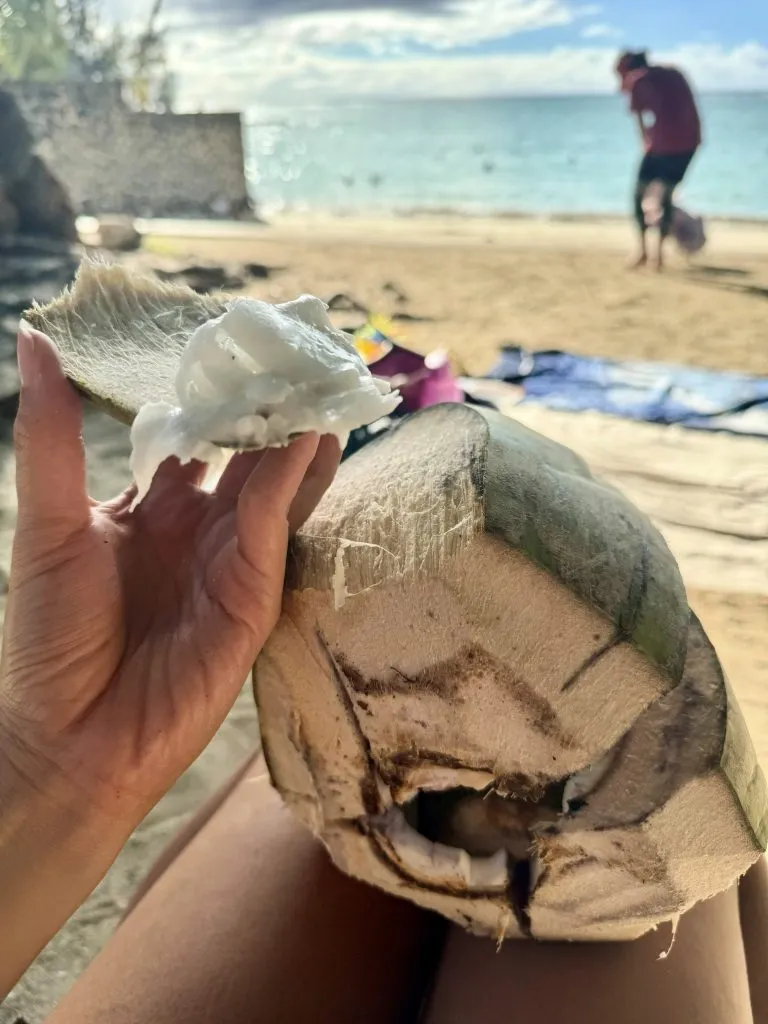
Fresh coconut is sold from carts right by the shoreline. The vendor knocks off the top with a few machete strokes, hands you a straw, and charges around $1.50. Once you’ve drunk the water, hand it back and they’ll split it open so you can scrape out the fresh coconut flesh with a piece of the shell. Kids love watching the whole ritual almost as much as they love the coconut.
The Sunday ice cream cart
On Sundays, keep an eye out for the sorbet mauricien cart making its way along the seafront. Mauritians know it as sorbet carré or kulfi malai: a dense, creamy, rectangular ice cream bar served on a stick, with South Asian roots that go back generations on the island. You receive it already on its stick, bare and unadorned, and eat it just like that standing on the sand. The flavour range is generous: vanilla, coconut, pineapple, passion fruit, almond, chocolate and more depending on the cart. A stick costs around $1 to $1.50. If you’re visiting for more than a few days, plan at least one beach morning around a Sunday.
Practical details
Pereybere is a 15-minute drive from Grand Baie, or about $5 to $7 in a taxi. Parking along the beachfront road is limited, so you’ll need to be creative about where you leave the car. Arriving early solves most of the problem and means you beat the afternoon crowds at the same time.
There are public toilets nearby, which is useful for a full day out. Worth knowing: mosquitoes can be present around the toilet block, so a small repellent in your bag is a sensible precaution, especially if you’re visiting with young children.
There’s no lifeguard service, so keep an eye on children in the water even though the lagoon is calm. The water stays shallow for a good distance from shore, which helps considerably. Sun protection is essential as the UV index in Mauritius is high year-round and beach umbrellas aren’t always easy to rent, so bring your own if you’re planning a full day.
Snorkelling off the beach is possible with your own gear. There’s a small reef section to the east side of the main beach where you’ll find parrotfish, angelfish and occasional sea turtles. Nothing that requires a dive qualification, just a mask and fins.
Where to stay nearby
For families, the cluster of self-catering apartments and small guesthouses around Pereybere and Grand Baie makes more sense than a full resort. You get a kitchen (useful with kids), space, and the freedom to use the public beach without paying resort prices. Options run from $80 to $150 per night for a decent apartment. Couples looking for something more polished will find better options a short drive away in Mont Choisy or Cap Malheureux, both within 15 minutes of Pereybere.
Browse recommended hotels near Pereybere here.